Winter Car Maintenance Checklist to Avoid Breakdowns

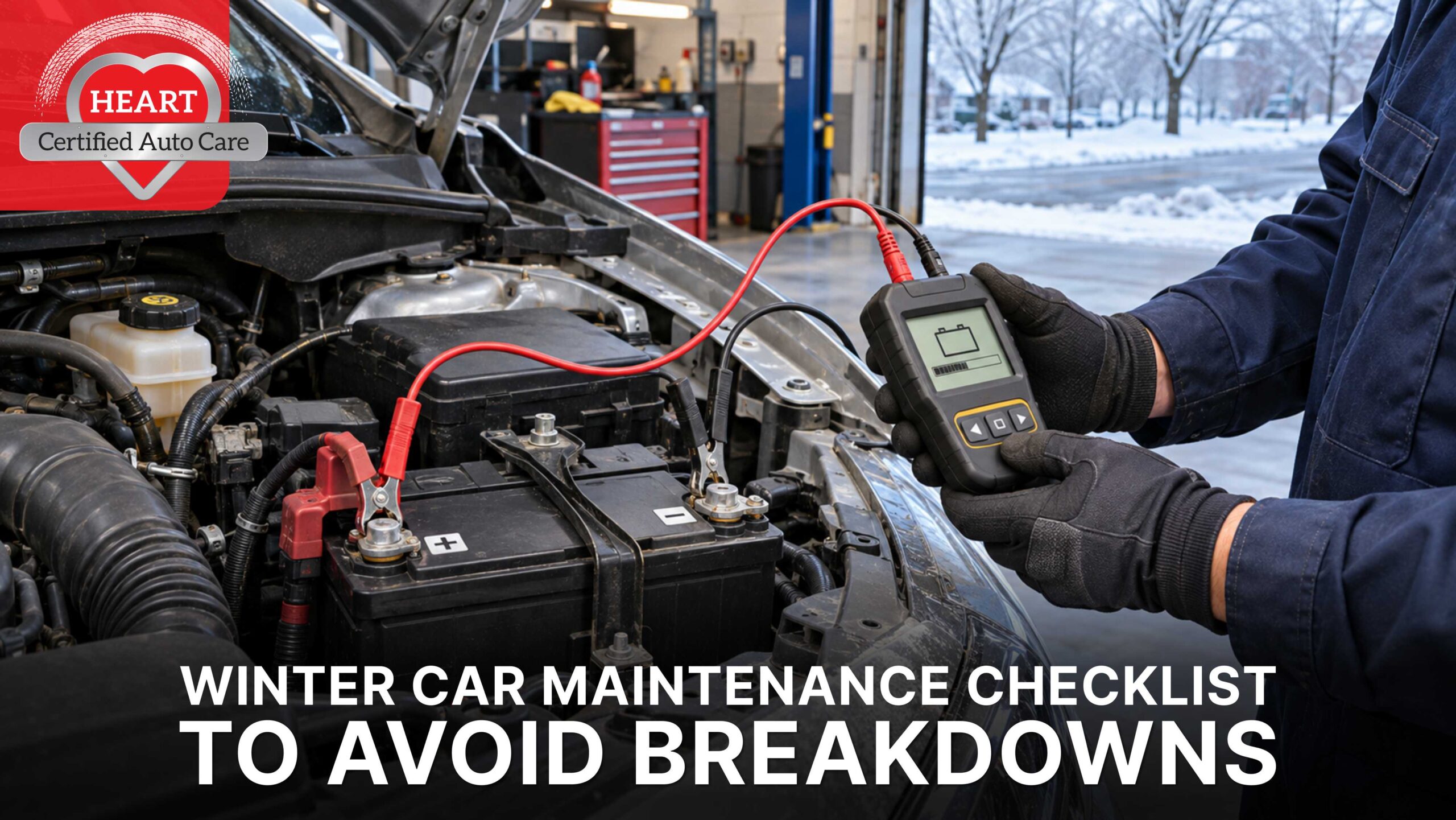
Mechanic checking a car battery during a winter car maintenance inspection

Winter in Chicagoland can put extra strain on your vehicle. Freezing temperatures, snow, slush, and road salt can expose weak batteries, worn tires, aging hoses, and other problems that may have gone unnoticed during warmer months. Following a winter car maintenance checklist before the first major cold snap can help you catch these issues before they leave you stranded.

You do not need to be a mechanic to handle the basic checks. A few simple inspections at home, combined with professional maintenance when needed, can help you prepare your car or SUV for winter driving.

TL;DR Winter Car Maintenance Checklist

  • Test the battery before temperatures drop because cold weather makes starting a vehicle harder.
  • Inspect tires and tire pressure to maintain traction on wet, snowy, and icy roads.
  • Check engine oil, coolant, and washer fluid to confirm they meet your vehicle’s requirements and local winter conditions.
  • Inspect brakes, lights, wipers, and the heating system to identify problems that can affect safety and visibility.
  • Schedule a winter vehicle inspection if you notice warning signs or need help checking critical components.

Why Winter Car Maintenance Matters

Cold weather does not automatically cause a breakdown. However, it can expose existing weaknesses in your vehicle, particularly when the engine needs more effort to start and road conditions become less predictable.

A winter car maintenance checklist helps you prioritize the systems that matter most during the colder months. Drivers in Evanston, Wilmette, Northbrook, and Libertyville should pay particular attention to battery condition, tire grip, fluid protection, and braking performance before regular snow and ice arrive.

Preparing early also gives you time to address problems before repair shops become busy during the first major winter storm.

1. Check Your Battery and Charging System

Your battery is one of the first components to inspect before winter. Low temperatures reduce a battery’s available starting power, while cold engine oil can make the engine harder to turn over. A battery that starts your car reliably in fall may struggle during a freezing morning.

A winter car battery check is especially important if your battery is several years old or your vehicle has recently started cranking slowly.

Use these checks to identify potential problems.

  • Watch for slow starts – Listen for sluggish cranking when you turn the key or press the start button. Repeated slow starts may indicate a weak battery or a problem with the charging system.
  • Inspect battery terminals – Look for corrosion, loose connections, or damaged cables. Poor electrical connections can interfere with starting.
  • Check the battery’s age – Many conventional car batteries last around three to five years, although climate, driving habits, and battery type affect their lifespan. Have an older battery tested rather than assuming it will last another winter.
  • Pay attention to warning lights – A battery-shaped dashboard light while the engine is running may indicate a charging system problem. Have it checked promptly.
  • Test the battery professionally – A proper battery test can measure its condition and ability to deliver starting power. A technician can also check the alternator and starter when symptoms suggest an electrical problem.

A battery can look clean and still fail a performance test. Professional testing is particularly useful before winter if your vehicle has experienced intermittent starting problems.

2. Inspect Tires for Winter Traction

Tires connect your vehicle to the road, so their condition matters when snow, ice, and freezing rain affect driving conditions. Good winter tire maintenance starts with checking tread depth, pressure, wear patterns, and visible damage.

SUV drivers should take the same precautions as sedan owners. All-wheel drive can help a vehicle accelerate on slippery surfaces, but it does not eliminate the need for suitable tires or shorten braking distances on ice.

Use the following winter tire maintenance checks before the weather turns severe.

  • Measure tread depth – Check that your tires have adequate tread for the conditions you expect. The legal minimum in Illinois is generally 2/32 of an inch, but tires near that limit may offer limited traction in snow and standing water.
  • Check tire pressure – Measure pressure when the tires are cold and follow the recommendation on the driver’s door-jamb label or owner’s manual. Cold air can lower tire pressure, so check it regularly during winter.
  • Look for uneven wear – Wear concentrated on one edge, both shoulders, or the center may point to alignment, inflation, or suspension problems. Ask a technician to investigate persistent uneven wear.
  • Inspect sidewalls – Look for cuts, cracks, bulges, or other damage. A bulge can indicate internal tire damage and requires prompt professional attention.
  • Evaluate winter tire needs – Consider dedicated winter tires if you regularly drive on snow or ice. Their rubber compounds and tread designs can improve cold-weather traction compared with many all-season tires.

Check the spare tire too, if your vehicle carries one, and confirm that the jack and lug wrench are available. Good winter tire maintenance also includes regular pressure checks throughout the season, not only before the first snowfall.

3. Check Engine Oil and Other Essential Fluids

Fluids help your vehicle operate properly across changing temperatures. During cold weather car maintenance, pay close attention to engine oil, engine coolant, brake fluid, and windshield washer fluid.

Using the wrong product or ignoring a low fluid level can create problems that become harder to manage in severe weather.

  • Verify the correct engine oil – Consult your owner’s manual for the recommended viscosity and specifications. Some vehicles require oil designed to flow more readily during cold starts, but you should not change oil grades without checking the manufacturer’s guidance.
  • Inspect engine coolant – Check the coolant reservoir when the engine is completely cold. The level should fall within the marked range, and the coolant must provide suitable freeze protection for your climate.
  • Check brake fluid – Low brake fluid can indicate a leak or worn brake components. Do not simply top it off and ignore a falling level or a brake warning light.
  • Fill the washer reservoir – Use windshield washer fluid rated for temperatures below the coldest conditions you expect. Summer fluid or a diluted mixture may freeze and leave you without a clear windshield.
  • Look for leaks – Check the ground beneath your parked vehicle for unexplained puddles. Coolant, oil, and other fluid leaks deserve attention before winter travel.

Never remove a radiator cap or open a pressurized cooling system while the engine is hot. If the coolant level keeps dropping or the temperature gauge rises above its normal range, arrange a professional inspection.


oil change coupon details


oil change coupon details

4. Inspect Brakes, Belts, and Hoses

Winter roads can make stopping more difficult, which means your brakes need to work correctly before snow and ice arrive. Belts and hoses also deserve attention because they support important engine and accessory systems.

A winter vehicle inspection can identify wear that is difficult to spot during a quick driveway check.

  • Listen for brake noises – Squealing, grinding, or unusual scraping may indicate worn pads or another brake problem. Grinding noises warrant prompt attention.
  • Notice changes in pedal feel – A soft or sinking brake pedal, increased stopping distance, or a vehicle pulling to one side can signal a safety issue.
  • Look for cracked hoses – Bulges, visible cracks, damp areas, or coolant residue can indicate deterioration or leaks.
  • Inspect accessible belts – Fraying, missing material, or unusual belt noise may point to a problem. Avoid reaching near moving engine components.
  • Pay attention to dashboard warnings – Brake, engine temperature, and charging system warnings can signal problems that should be diagnosed before a long winter drive.

These checks help you identify concerns early, but a visual inspection cannot confirm the condition of every internal component. Have a qualified technician assess any unusual noises, leaks, or changes in vehicle performance.

5. Prepare Wipers, Lights, Heat, and Defrosting

Snow, slush, road spray, and shorter daylight hours can make winter driving more demanding. Your windshield, exterior lights, and defrosting system need to work properly so you can see and be seen.

Include these items in your cold weather car maintenance routine.

  • Replace worn wiper blades – Streaking, skipping, or missed areas can reduce visibility during snow and rain. Replace blades that no longer clear the windshield effectively.
  • Test the washer system – Confirm that fluid sprays onto the windshield and that the reservoir contains winter-rated fluid. Clear blocked nozzles before freezing conditions make the problem more inconvenient.
  • Check every exterior light – Test headlights, brake lights, turn signals, hazard lights, and taillights. Clean dirty lenses so other drivers can see your vehicle clearly.
  • Test the heater and defroster – Confirm that warm air reaches the cabin and the defroster clears the windshield. Weak airflow or persistent fogging may require further diagnosis.
  • Clear snow and ice before driving – Remove snow from the roof, hood, windows, mirrors, and lights. Snow sliding off the roof can obstruct your view or create a hazard for vehicles behind you.

If your windshield repeatedly fogs up or your heater stops producing enough warmth, do not assume the issue is minor. A technician can check the heating system, cooling system, cabin air filter, and other relevant components.

6. Build a Winter Emergency Kit

Even a well-maintained vehicle can experience a flat tire, collision-related delay, or unexpected mechanical problem. A winter emergency kit gives you useful supplies if you must wait for assistance in cold conditions.

Keep these essentials in your vehicle throughout the season.

  • Warm clothing and a blanket – Pack extra gloves, a hat, and warm layers in case you need to wait for help.
  • A flashlight and spare batteries – These help you inspect your surroundings or find items after dark.
  • A phone charger or power bank – Keep your phone charged so you can contact roadside assistance or share your location.
  • A snow brush and ice scraper – Use them to clear windows, mirrors, lights, and other surfaces before driving.
  • Jumper cables or a compatible jump starter – These may help with a discharged battery when used according to the vehicle and equipment instructions.
  • A small shovel and traction aid – These can help you clear snow around the tires or improve traction when the vehicle is stuck.
  • Basic first-aid supplies and drinking water – Store supplies appropriately for freezing temperatures and check them periodically.

Keep the kit accessible rather than buried beneath luggage. If you travel regularly in severe winter weather, add reflective warning equipment and follow local guidance for safe roadside emergencies.

7. Follow a Winter Maintenance Schedule

Completing a winter car maintenance checklist once is a useful starting point, but your vehicle still needs attention throughout the season. A simple schedule makes it easier to spot changes before they become urgent repairs.

Before the first major freeze

  • Test the battery and charging system.
  • Check tire pressure, tread, and visible damage.
  • Verify coolant protection and fluid levels.
  • Inspect brakes, belts, hoses, lights, and wipers.
  • Confirm that the heater and defroster work properly.

During winter

  • Check tire pressure regularly, especially when temperatures change sharply.
  • Monitor fluid levels and watch for leaks.
  • Remove road salt and grime from the vehicle, including the underbody when practical.
  • Pay attention to new noises, warning lights, vibrations, or starting problems.
  • Keep the fuel tank adequately filled during severe weather and long trips.

After a difficult winter

  • Check for uneven tire wear and alignment concerns.
  • Have brakes inspected if you notice noise, vibration, or reduced performance.
  • Look for corrosion or damage caused by road salt.
  • Review any maintenance that was postponed during the colder months.

Follow the maintenance intervals in your owner’s manual and adjust your routine to your driving conditions. Short trips, heavy traffic, and frequent cold starts can place different demands on a vehicle than long highway drives.


heart team members with contact information

Prepare for Winter With HEART Certified Auto Care

A consistent winter car maintenance checklist helps you catch developing problems, protect important components, and prepare for unpredictable road conditions. Start with the battery, tires, fluids, brakes, and visibility systems, then address any warning signs before your next long drive.

HEART Certified Auto Care offers a free 33-point digital vehicle inspection with photos and notes to help you understand your vehicle’s condition. The team can identify maintenance needs and explain recommended repairs so you can make informed decisions before winter weather puts extra demands on your car.

Get your vehicle checked before the next cold snap. Book an appointment with HEART Certified Auto Care in Evanston, Wilmette, Northbrook, or Libertyville through heartautocare.com. A professional inspection can help you prepare for the season and address potential problems before they leave you waiting for roadside assistance.


author avatar
Akasha Qaiser

Auto Repair & Maintenance Near You

heart icon

Auto Repair That Actually Cares

heart icon

At HEART Certified Auto Care, we believe auto repair should feel honest, approachable, and stress-free — not confusing or intimidating. We’re not your typical repair shop. We take the time to explain what your car truly needs (and what it doesn’t), so you can make confident decisions without pressure.

Our experienced technicians focus on long-term vehicle health, preventative care, and clear communication. Whether you’re stopping in for routine maintenance or unexpected repairs, you’ll always be treated like family — with respect, transparency, and genuine care for your safety on the road.

With multiple convenient locations, HEART Certified Auto Care proudly serves drivers throughout Chicago’s North Shore and surrounding suburbs, providing dependable auto repair you can trust year after year.

Proudly Serving Local Communities Including:

Proud to Partner With Our Local Chambers of Commerce
Rooted in the Communities We Serve

What HEART Offers

Servicing Your Vehicle Has Never Been Easier

Icon representing 3 Year Warranty

3 Year Warranty

Icon representing Free Loaner Cars

Free Loaner Cars

Icon representing 98% Same Day Service

98% Same Day Service

Icon representing Transparent Pricing

Transparent Pricing

Icon representing Finance Options

Finance Options

Icon representing Certified Technicians

Certified Technicians

Icon representing Free Digital Inspection

Free Digital Inspection