



3 Year Warranty
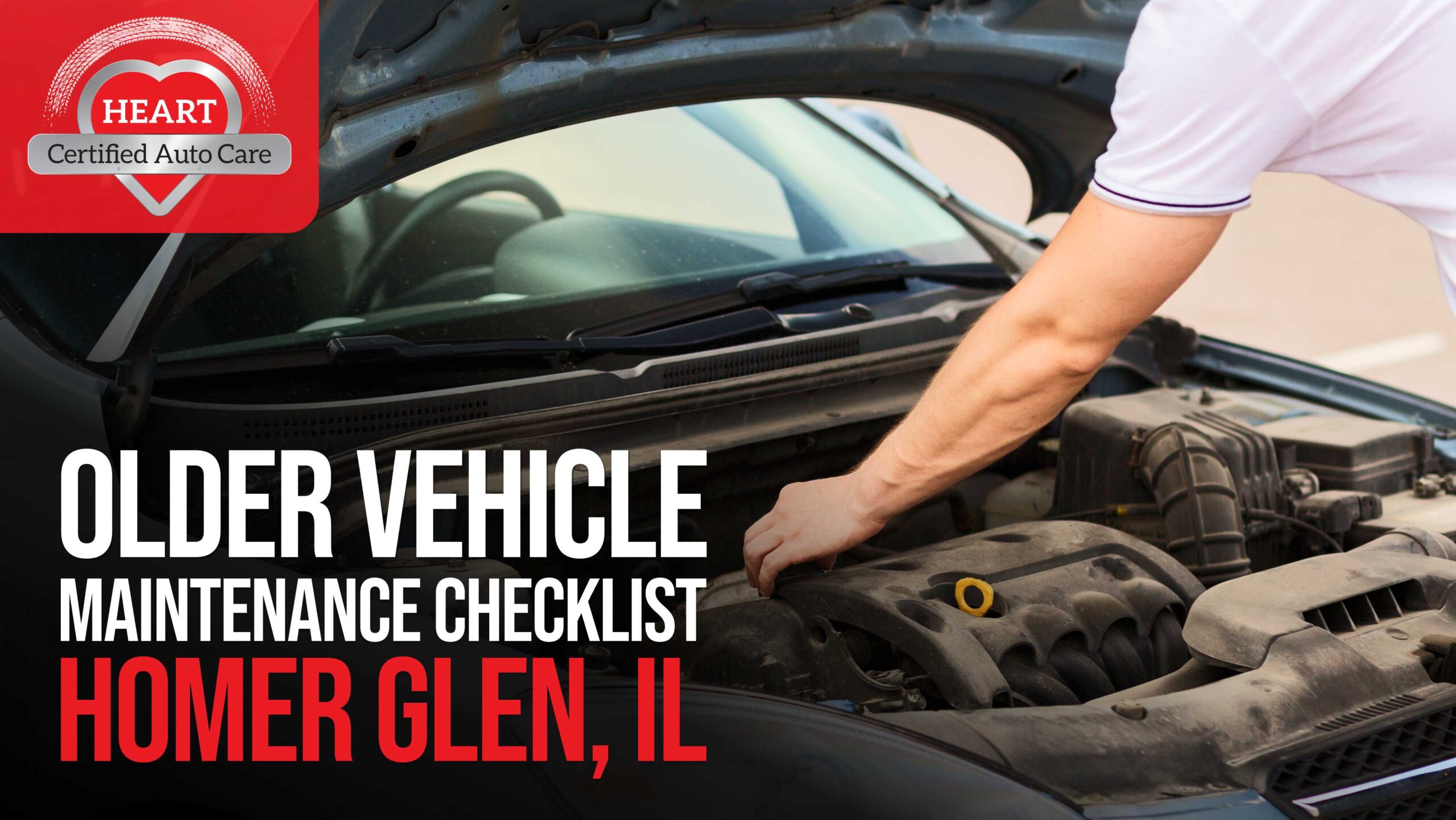
Keeping an older vehicle dependable takes a little more attention as the miles and years add up. An older vehicle maintenance checklist Homer Glen IL drivers can actually follow should cover routine oil service, tires, brakes, fluids, belts, hoses, batteries, suspension, and other parts that experience wear over time.
A vehicle with 100,000 or even 150,000 miles can still serve as a reliable daily driver. The key is knowing what needs attention, keeping service records, and addressing minor issues before they become larger repair problems. Current maintenance guidance also stresses following the manufacturer’s schedule and adjusting service based on mileage, age, driving conditions, and vehicle condition.
For high-mileage car maintenance in Homer Glen IL, the goal is to understand what your vehicle needs now and what may become due next. A written checklist makes it easier to plan for service rather than react to every problem as it arises.
Age affects a vehicle even when the odometer does not move quickly. Heat cycles, vibration, moisture, road salt, and repeated use can affect rubber seals, hoses, suspension bushings, electrical connections, and other components.
Mileage also matters. A vehicle that has traveled 150,000 miles has experienced substantially more operating cycles than one with 50,000 miles. However, mileage alone does not tell the entire story.
A well-maintained 12-year-old vehicle may have fewer problems than a newer vehicle with neglected service. Your maintenance history, driving conditions, previous repairs, and the manufacturer’s recommendations all help determine what to check next.
That is why preventive vehicle maintenance in Homer Glen IL should be personalized rather than based on age alone.
A useful checklist should cover the systems that affect reliability, safety, and everyday drivability. Use the following as a starting point, then compare it with your vehicle’s owner’s manual.
Regular oil service remains one of the basic foundations of long-term vehicle care. Engine oil reduces friction, dissipates heat from internal components, and helps control contaminants within the engine.
Oil service gives you an opportunity to spot other problems, too. During routine service, ask for visible leaks, worn components, and unusual fluid conditions to be checked rather than treating an oil change as a completely separate task.
For high-mileage car maintenance in Homer Glen IL, keeping accurate oil-service records can also help a technician identify changes in oil consumption over time.
Tires and brakes deserve regular attention because they directly affect stopping, steering, and road contact. Older vehicles can also develop suspension or alignment problems that create uneven tire wear.
Do not wait for a tire or brake problem to become obvious while driving. A visual inspection can identify wear before it affects how the vehicle feels on the road.
Fluids change with age and use. Some gradually become contaminated or lose their protective properties, while low fluid levels can signal a leak.
Cooling-system maintenance deserves particular attention in an aging vehicle. A small coolant leak can eventually contribute to overheating, so unusual temperature readings or a sweet coolant odor should receive prompt attention.


There is no single schedule that fits every older car. A vehicle’s manufacturer schedule should come first, followed by adjustments based on its condition and how it is driven.
For car maintenance schedule in Homer Glen IL, it helps to organize service into several categories.
Performing a few simple checks each month can help you spot changes early.
These checks take little time but can provide useful early warning. If something changes from one month to the next, make a note of it and mention it during your next service visit.
Oil service can serve as a convenient checkpoint for several other systems.
Combining these checks with routine service makes it easier to keep a running maintenance record. It can also prevent small concerns from being forgotten between appointments.
Major mileage milestones can be useful opportunities for a deeper inspection. Depending on the vehicle, these may include spark plugs, timing-belt service, transmission service, coolant service, filters, and other scheduled maintenance.
Never assume that every vehicle needs the same replacement at the same mileage. Timing belts, timing chains, transmission fluids, spark plugs, and coolant can have very different requirements depending on the make, model, engine, and service schedule.
Reaching 100,000 miles is a useful point to review your maintenance records from the beginning. If you do not have complete records, an inspection can help identify overdue work.
A 100,000-mile review may include:
The 100,000-mile mark does not automatically mean the vehicle needs every possible service. It means the owner should review the maintenance history carefully and identify what the manufacturer actually calls for.
At 150,000 miles, maintenance becomes increasingly dependent on the vehicle’s history and condition. Parts that have performed reliably for years can eventually develop age-related wear.
For older car repair in Homer Glen IL, technicians may need to investigate symptoms alongside scheduled maintenance. A clunking suspension, oil leak, rough shifting, vibration, or repeated battery failure can change the priority of your service plan.
Pay particular attention to:
The important distinction is between a maintenance item that is due and a repair that is needed because of an observed condition. A qualified inspection can help separate the two.
A checklist works best when it includes both scheduled maintenance and changes you notice while driving.
Watch for these signs:
Do not rely solely on a dashboard warning light to tell you when something is wrong. Many mechanical problems begin with subtle changes that an attentive driver can notice first.

Aging vehicles benefit from consistent attention rather than occasional catch-up repairs. Keeping track of oil, fluids, tires, brakes, cooling components, belts, hoses, battery condition, suspension, and manufacturer-specified services gives you a clearer picture of what your vehicle needs.
For older car repair in Homer Glen IL, KCC Car & Truck Care Homer Glen is part of the HEART family and provides local service with digital inspections, transparent recommendations, and a 3-year/36,000-mile warranty on qualifying repairs.
HEART Certified Auto Care also operates locations in Evanston, Wilmette, Northbrook, and Libertyville, as well as other Chicagoland locations.
If your car, truck, or SUV is getting older, do not wait for a breakdown to find out what needs attention. Schedule an inspection with KCC Car & Truck Care Homer Glen at 14134 S Bell Rd, or connect with HEART Certified Auto Care through its Evanston, Wilmette, Northbrook, or Libertyville locations.
You can schedule service through heartautocare.com and get a clearer maintenance plan for the miles ahead.


At HEART Certified Auto Care, we believe auto repair should feel honest, approachable, and stress-free — not confusing or intimidating. We’re not your typical repair shop. We take the time to explain what your car truly needs (and what it doesn’t), so you can make confident decisions without pressure.
Our experienced technicians focus on long-term vehicle health, preventative care, and clear communication. Whether you’re stopping in for routine maintenance or unexpected repairs, you’ll always be treated like family — with respect, transparency, and genuine care for your safety on the road.
With multiple convenient locations, HEART Certified Auto Care proudly serves drivers throughout Chicago’s North Shore and surrounding suburbs, providing dependable auto repair you can trust year after year.
Proudly Serving Local Communities Including:
Looking for dependable auto repair near you? Schedule an appointment with HEART Certified Auto Care today and experience the difference of local service done right.




Servicing Your Vehicle Has Never Been Easier
3 Year Warranty

Free Loaner Cars

98% Same Day Service

Transparent Pricing

Finance Options

Certified Technicians

Free Digital Inspection