



3 Year Warranty
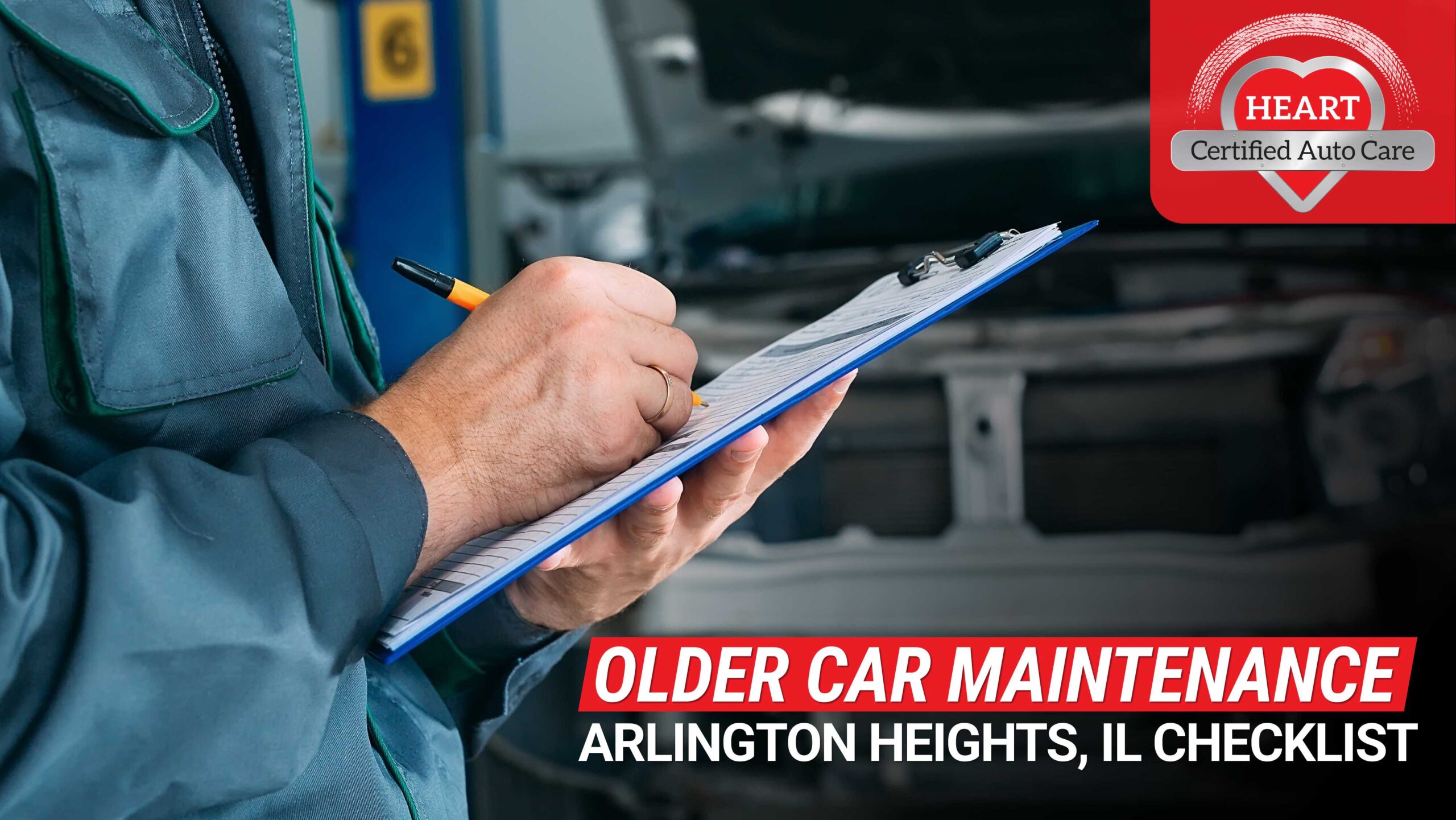
If you drive an older sedan, truck, or SUV, keeping up with routine service can help you avoid repairs that leave you stranded. This older car maintenance Arlington Heights IL checklist covers the systems that deserve closer attention as your vehicle adds years and miles.
A car does not suddenly become unreliable when it reaches 100,000 miles. Age, mileage, driving habits, previous service, and the condition of individual components all matter. A well-maintained vehicle can continue serving you for many years, but older vehicles benefit from a more deliberate maintenance plan.
For Arlington Heights drivers, that means checking your owner’s manual, keeping accurate service records, and having a technician inspect components that you cannot easily evaluate at home.
A newer vehicle may go through routine oil changes and inspections with relatively few surprises. As a vehicle gets older, several components begin reaching the point where normal wear becomes more noticeable.
This does not mean every older vehicle needs expensive repairs. In fact, Consumer Reports notes that keeping a vehicle for many years can make financial sense because depreciation slows as the vehicle ages. Its 2026 guidance also highlights 200,000 miles as an important ownership milestone for drivers who want to maximize the value of a vehicle.
The key is knowing what deserves attention before a minor problem affects another system.
A useful car maintenance checklist in Arlington Heights IL should account for both mileage and age. Your maintenance plan may look different from your neighbor’s even if you drive similar vehicles.
For example, a 12-year-old SUV with 90,000 miles may need attention to age-related rubber components, fluids, battery condition, and suspension parts. A five-year-old vehicle with 140,000 highway miles may have different priorities.
An older vehicle benefits from a full-system approach instead of focusing only on oil changes. These are the major areas to include in your car maintenance checklist in Arlington Heights IL.
Engine oil protects moving components from friction and heat. Follow the oil type and service interval specified by your vehicle manufacturer rather than automatically switching to a high-mileage oil or shortening intervals without a reason.
Oil level matters, too. Check it according to the instructions in your owner’s manual and pay attention to repeated drops in the level. Frequent topping off can indicate a leak or oil consumption that warrants investigation.
Replace the engine air filter when it becomes restricted or reaches the manufacturer’s service interval. A clean filter helps the engine receive the airflow it needs for normal operation.
Transmission problems can become expensive quickly, so fluid condition deserves attention as a vehicle ages.
Follow the manufacturer’s recommendations for transmission fluid service. Some vehicles have specific fluid types and procedures, so avoid treating every transmission the same way.
For vehicles with AWD or 4WD, also check the maintenance schedule for differential and transfer-case fluids. These services can be easy to overlook because the vehicle may continue driving normally even when fluid service is due.
This is one reason high-mileage car maintenance in Arlington Heights IL should follow the specific requirements for your make and model rather than a generic mileage chart.
The cooling system protects the engine from excessive heat. Coolant gradually loses its protective properties, while hoses, clamps, seals, thermostats, radiators, and water pumps can develop problems as the vehicle ages.
Watch for:
Never open a hot cooling system. If your vehicle is overheating, pull over safely and allow it to cool before attempting any inspection.
Brake inspection becomes increasingly important as a vehicle gets older because several components can wear at different rates.
A brake inspection should consider pads, rotors, calipers, brake fluid, hoses, and related hardware. Do not wait for grinding before scheduling an inspection. Squealing, pulsation, pulling, vibration, a soft pedal, or increased stopping distance can all signal a problem.
Brake wear also varies based on driving habits. Frequent stop-and-go traffic can put different demands on a vehicle than longer highway trips.
Tires affect braking, handling, comfort, and traction. Check tire pressure regularly using the pressure listed by the vehicle manufacturer rather than the maximum pressure printed on the tire sidewall.
Inspect the tread and look for uneven wear, cracks, bulges, or other visible damage.
Alignment deserves attention when you notice the vehicle pulling to one side, the steering wheel sitting off-center, or uneven tire wear. Potholes and rough roads can also affect alignment and suspension components.
Tire condition belongs on every preventive auto maintenance in Arlington Heights IL plan because a healthy engine does little good if the tires cannot maintain proper contact with the road.
An older vehicle may develop electrical issues that are unrelated to the engine itself.
Have the battery tested as it ages, especially before extreme seasonal temperatures. Check for slow cranking, dim lights, inconsistent electrical accessories, or repeated starting problems.
The charging system also matters. A weak alternator can create symptoms that initially look like a bad battery.
Rubber components age even when the vehicle does not accumulate many miles.
Inspect belts for cracking, fraying, glazing, or other signs of deterioration. Hoses should also be checked for swelling, soft spots, cracks, and leaks.
Seals and gaskets can develop leaks over time. A small fluid spot in the driveway may provide an early clue that something needs attention.


Mileage can provide useful maintenance checkpoints, but it should never replace the manufacturer’s service schedule.
Tires Plus recommends reviewing major maintenance needs around 100,000, 150,000, and 200,000 miles. Its checklist includes items such as spark plugs, fluids, filters, brakes, belts, suspension components, exhaust components, the battery, and other systems that may require inspection or replacement as mileage increases.
At 100,000 miles, review the complete service history. Look at items that may have been scheduled earlier but were skipped or delayed.
Depending on your vehicle, this may include:
The 100,000-mile point is also a useful time to establish a maintenance record if you recently bought the vehicle.
At 150,000 miles, wear can become easier to notice in suspension and drivetrain components. Tires Plus specifically recommends inspecting shocks, struts, seals, belts, hoses, fluids, exhaust components, and fuel-system components at this stage.
Pay attention to changes in how your vehicle drives.
A rougher ride, excessive bouncing, clunking over bumps, steering changes, transmission hesitation, or fluid leaks can provide useful clues.
If your vehicle reaches this mileage with a strong service history, that is a positive sign. The goal is to identify upcoming maintenance before several repairs become due at once.
Reaching 200,000 miles can be a significant achievement for a well-maintained vehicle.
At this stage, inspect the vehicle according to its individual condition. Components serviced at around 100,000 miles may be approaching another service interval, while other original parts may have reached the end of their useful life.
Your technician may recommend a closer inspection of:
High-mileage vehicles can remain useful daily drivers when their maintenance history is strong and repairs are handled at appropriate intervals.
Some problems give you plenty of warning. Others can develop quietly.
If you notice any of the following, consider scheduling an inspection rather than waiting for the symptoms to worsen.
A symptom does not automatically mean you need a major repair. Proper diagnosis can help determine the actual cause and prevent unnecessary parts from being replaced.
A maintenance plan becomes easier when you divide repairs into three categories: immediate safety concerns, upcoming maintenance, and items to monitor.
This approach can make preventive auto maintenance in Arlington Heights IL easier to manage when your vehicle has several aging components at once.
Brakes, steering, tires, serious leaks, overheating, and other issues that can affect safe operation should receive priority.
If a warning light accompanies severe symptoms such as overheating, loss of braking ability, or major fluid loss, stop driving when it is safe to do so and seek professional assistance.
Some maintenance items can be scheduled before they become urgent.
For example, if an inspection shows that your tires have limited remaining tread but are still safe, you can plan for replacement rather than waiting for an unexpected failure.
The same principle applies to belts, brakes, batteries, suspension components, and fluid services.
Write down the date, mileage, service performed, and parts replaced.
A maintenance record helps you avoid duplicate services and gives your technician useful information when diagnosing a problem. It also makes it easier to estimate which services may be approaching.

Keeping an older vehicle reliable comes down to consistent care and timely decisions. Routine inspections, fluid services, tire and brake checks, and attention to warning signs can help you catch problems while they are still manageable.
If you need older vehicle repair in Arlington Heights IL, HEART Certified Auto Care can help you understand what your vehicle needs and which repairs deserve priority. The Arlington Heights team provides digital inspections, certified technicians, transparent recommendations, and a 3-year/36,000-mile warranty on qualifying repairs.
If your car or SUV is getting older, do not wait for a breakdown to find out what it needs. Schedule an inspection with HEART Certified Auto Care in Arlington Heights, or visit a convenient HEART location in Evanston, Wilmette, Northbrook, or Libertyville.
You can schedule an appointment online or explore HEART’s auto repair services to find the right service for your vehicle.


At HEART Certified Auto Care, we believe auto repair should feel honest, approachable, and stress-free — not confusing or intimidating. We’re not your typical repair shop. We take the time to explain what your car truly needs (and what it doesn’t), so you can make confident decisions without pressure.
Our experienced technicians focus on long-term vehicle health, preventative care, and clear communication. Whether you’re stopping in for routine maintenance or unexpected repairs, you’ll always be treated like family — with respect, transparency, and genuine care for your safety on the road.
With multiple convenient locations, HEART Certified Auto Care proudly serves drivers throughout Chicago’s North Shore and surrounding suburbs, providing dependable auto repair you can trust year after year.
Proudly Serving Local Communities Including:
Looking for dependable auto repair near you? Schedule an appointment with HEART Certified Auto Care today and experience the difference of local service done right.





Servicing Your Vehicle Has Never Been Easier
3 Year Warranty

Free Loaner Cars

98% Same Day Service

Transparent Pricing

Finance Options

Certified Technicians

Free Digital Inspection