


3 Year Warranty
Buying replacement tires can feel confusing when the sidewall is covered with numbers and letters. Understanding how to read tire size numbers makes it easier to compare options, identify the right fit for your car or SUV, and avoid purchasing tires that do not meet your vehicle’s specifications.
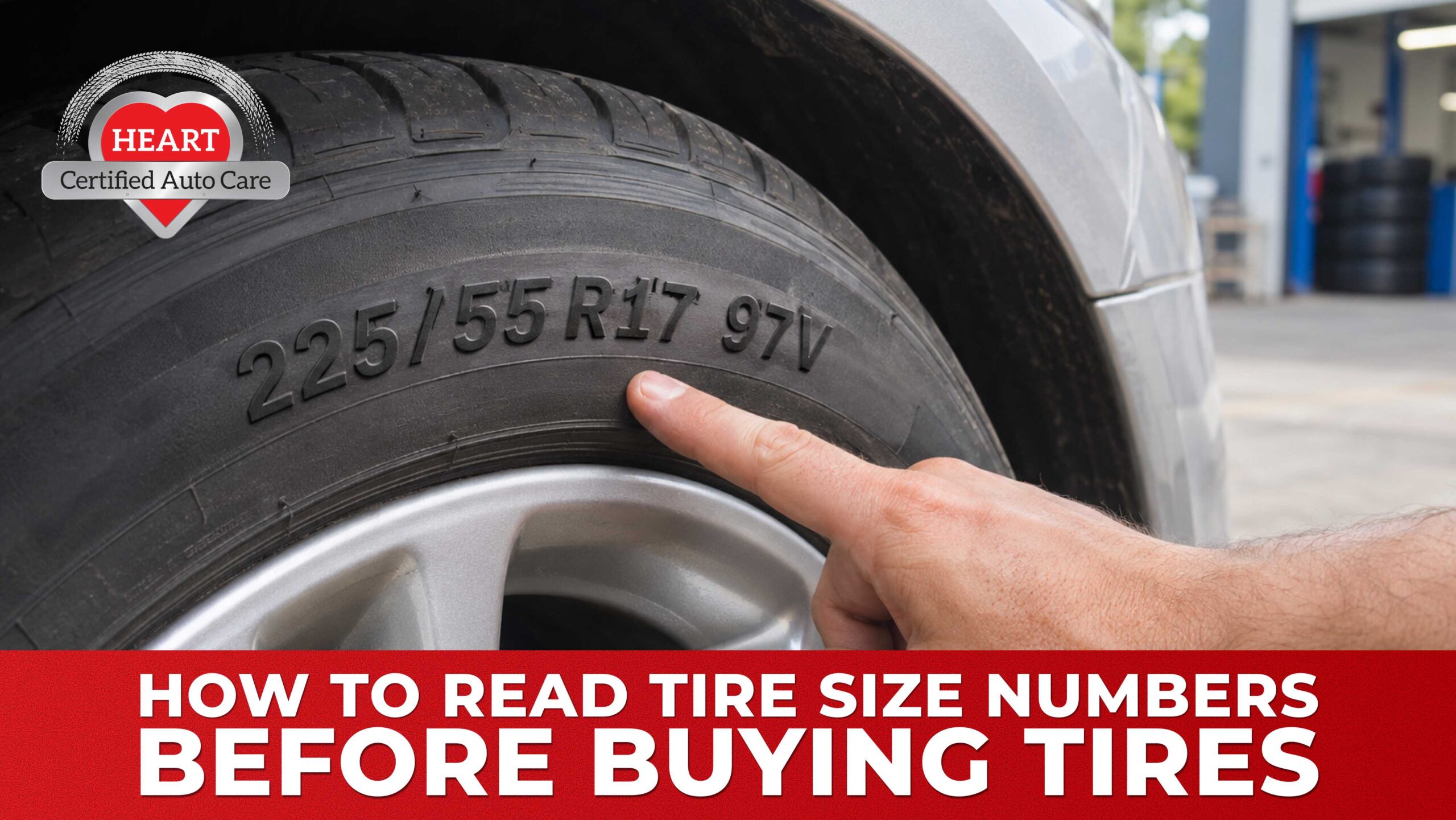
A tire marking such as P225/65R17 102H contains information about the tire’s width, sidewall proportions, construction, wheel diameter, load capacity, and speed rating. Each part serves a purpose, and knowing what it means can help you make a better buying decision.
The easiest way to understand tire markings is to break them into smaller parts. Look at the sidewall, which is the rubber surface between the tread and the wheel rim, and find a sequence similar to P225/65R17 102H.
For this example, the tire size numbers explained below follow the standard format used for many passenger vehicles and SUVs. Exact markings vary by tire type and vehicle.
| Marking | Meaning | Example |
|---|---|---|
| P | Passenger tire designation | P225 |
| 225 | Nominal section width in millimeters | 225 mm |
| 65 | Aspect ratio, expressed as a percentage | 65% |
| R | Radial construction | Radial tire |
| 17 | Wheel diameter in inches | 17-inch wheel |
| 102 | Load index | Look up the corresponding capacity |
| H | Speed rating | Up to 130 mph under specified conditions |
The P designation identifies a passenger tire category commonly used in North America. Not every tire begins with P, and an LT marking, for example, identifies a light-truck tire category.
The numbers and letters after the wheel diameter describe additional operating requirements. They should be checked along with the tire’s dimensions rather than treated as optional details. Michelin’s tire-marking guide provides further information on these markings.
The first three digits usually indicate the tire’s nominal section width in millimeters. A tire marked 225 is approximately 225 mm wide from sidewall to sidewall under its specified measuring conditions.
The next number describes the sidewall height as a percentage of that width. For a 225/65 tire, the calculation is:
225 × 0.65 = 146.25 mm
That gives a nominal sidewall height of 146.25 mm. It is not the tire’s total height, which also depends on the wheel diameter and the second sidewall.
Understanding tire width and aspect ratio helps you compare sizes more accurately. A lower aspect ratio generally means a shorter sidewall relative to the width, while a higher ratio means a taller sidewall relative to the width. However, ride comfort and handling also depend on tire design, construction, pressure, and vehicle setup.
The letter R stands for radial construction, which is used by most modern passenger-car tires. It describes how the tire’s internal reinforcing cords are arranged.
The number immediately after R indicates the wheel diameter in inches. For example, a tire marked R17 is designed for a compatible 17-inch wheel.
This measurement must match the wheel diameter. A tire made for a 17-inch wheel cannot be installed on an 18-inch wheel simply because its width and profile look similar.
A marking such as 102H includes two additional specifications.
The number 102 is the load index. Under the standard load-index table, index 102 corresponds to a maximum load of 850 kg per tire under the applicable conditions.
The letter H is the speed rating, which corresponds to a certified speed category of up to 130 mph under specified test conditions. This rating does not mean you should drive at that speed, nor does it override speed limits or road conditions.
When shopping for replacement tires, match or exceed the vehicle manufacturer’s required load and speed specifications, subject to the vehicle’s approved fitment requirements.

Your existing tires can provide a useful reference, but do not rely on them alone. A previous owner may have installed a different size, or the vehicle may have different approved tire sizes for different trims and wheel packages.
Use these steps to confirm the correct specifications before placing an order.
These steps help you learn how to find tire size for your car without relying on guesswork. If the sidewall and door placard disagree, investigate the difference before buying. The placard and owner’s manual should guide your decision, with the vehicle manufacturer’s fitment information taking priority.
Depending on the vehicle, the recommended tire information may also appear in the glove box, fuel-filler area, or electronic owner’s manual. The exact location varies by manufacturer.
Keep a photo of the door-jamb label on your phone. It can save time when comparing prices online or requesting a quote from a tire shop.
Two tires can look similar but have different dimensions or load requirements. Understanding the code helps you narrow your options, but it does not automatically confirm that a different size will fit your vehicle.
Consider a common example, 225/65R17 102H.
Reading these markings lets you compare tires with the same general size while checking their service ratings. A tire with the same dimensions may still have a different load index, speed rating, construction, or intended use.
A different tire size may change ground clearance, handling, ride comfort, and the accuracy of the speedometer. It can also create clearance problems around the suspension or bodywork if the dimensions are not compatible.
For example, a wider tire with the same aspect ratio can also have a taller sidewall because the percentage applies to a larger width. This means changing only one number can affect more than one dimension.
Before choosing an alternative size, confirm that it is approved for your vehicle. A tire-size calculator can help compare nominal dimensions, but it cannot confirm wheel fitment, load suitability, or clearance on its own.
Knowing the code is only one part of choosing the right replacement. These common mistakes can lead to unnecessary expenses or tires that do not meet your vehicle’s requirements.
A careful comparison can help you avoid buying a tire that looks right but does not meet the vehicle’s requirements. If any specification is unclear, ask a tire professional to verify it before installation.
The size code is important, but it is not the only information printed on a tire. Other markings can help you determine whether a tire suits your vehicle, climate, and driving habits.
Check the complete markings and the tire manufacturer’s specifications when comparing options. Tire age, condition, and suitability for your climate matter alongside size.
The tire size code describes dimensions and construction, while pressure affects how the tire supports the vehicle and contacts the road.
The correct cold inflation pressure is usually shown on the driver’s door placard or in the owner’s manual. It may differ from the maximum pressure printed on the tire itself.
Check pressure when the tires are cold, and follow the vehicle manufacturer’s instructions. Correct inflation helps maintain handling, reduce uneven wear, and support safe operation.
Your driving habits can help you narrow the selection once you have confirmed the approved size and ratings. A driver who commutes mainly on paved roads may prioritize comfort and tread life, while someone who regularly drives through snow may need a tire designed for winter traction.
Before purchasing, consider the following factors.
For drivers in Evanston, Wilmette, Northbrook, and Libertyville, seasonal temperature changes make it worthwhile to consider local road and weather conditions when selecting tires. The right choice still depends on your vehicle’s specifications and how you drive.

Learning how to read tire size numbers gives you a clearer picture of what your vehicle needs before you shop. Check the full size code, confirm the load and speed ratings, and use the vehicle manufacturer’s specifications as your starting point.
If you still have questions, HEART Certified Auto Care can help you compare suitable tire options and understand the requirements for your car or SUV. Our team focuses on clear recommendations and professional tire service so you can make an informed decision.
Ready to replace your tires? Visit heartautocare.com to request a tire quote or schedule an appointment at a convenient location.
HEART Certified Auto Care serves drivers at these North Shore locations:
Bring your tire size information or ask the team to help verify the right specifications before you buy. Professional guidance can help you choose tires that meet your vehicle’s requirements and suit your everyday driving needs.


At HEART Certified Auto Care, we believe auto repair should feel honest, approachable, and stress-free — not confusing or intimidating. We’re not your typical repair shop. We take the time to explain what your car truly needs (and what it doesn’t), so you can make confident decisions without pressure.
Our experienced technicians focus on long-term vehicle health, preventative care, and clear communication. Whether you’re stopping in for routine maintenance or unexpected repairs, you’ll always be treated like family — with respect, transparency, and genuine care for your safety on the road.
With multiple convenient locations, HEART Certified Auto Care proudly serves drivers throughout Chicago’s North Shore and surrounding suburbs, providing dependable auto repair you can trust year after year.
Proudly Serving Local Communities Including:
Looking for dependable auto repair near you? Schedule an appointment with HEART Certified Auto Care today and experience the difference of local service done right.





Servicing Your Vehicle Has Never Been Easier
3 Year Warranty
Free Loaner Cars

98% Same Day Service

Transparent Pricing

Finance Options

Certified Technicians

Free Digital Inspection