Maintaining the right tire pressure is one of the easiest ways to stay safe on the road. It improves handling, extends tire life, and makes your vehicle run more efficiently.
Still, many drivers aren’t sure where to find their recommended tire pressure, or if the PSI printed on the tire is even correct for their vehicle.
This guide covers exactly where to find the right PSI, when to check it, the signs your pressure is off, and how Heart Certified Auto Care can help keep your tires road-ready year-round.
Why Proper Tire Pressure Matters
Keeping the right air pressure in your tires can make a big difference for your car and your safety. When your tires are properly inflated, they wear evenly, last longer, cut down on rolling resistance, and even help improve your fuel efficiency.
Generally, tires lose or gain about 1 PSI for every 10°F change in temperature. That’s why it’s a good idea to check your air pressure every other time you stop for gas.
Just remember that some cars use different pressures for the front and rear tires, and don’t forget to check your spare while you’re at it.
What Does PSI Mean on a Tire?
Tire pressure and PSI are connected, but they’re not exactly the same thing. Tire pressure is simply the amount of air inside your tire, the pressure that helps support your vehicle. PSI, or pounds per square inch, is just the unit we use to measure that pressure.
In short, the tire holds the air, and PSI is how we talk about how much pressure is in there.
The
recommended tire pressure can change based on your vehicle, tire size, and how much weight you’re carrying. Checking it regularly and keeping it at the right level helps your tires last longer and keeps your drive safe.
How to Properly Check Your Tire Pressure
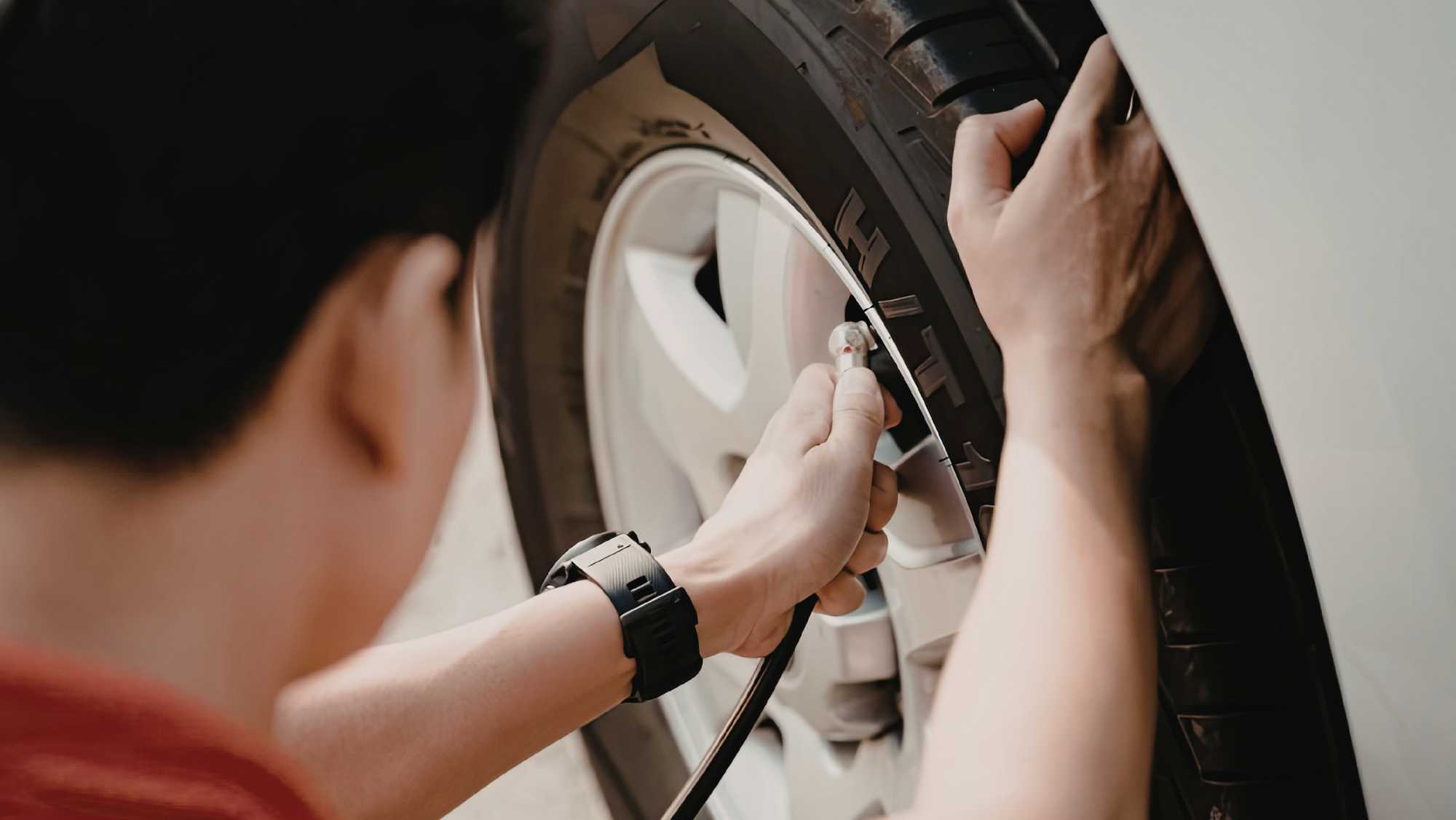
You’ll need a tire pressure gauge and an air compressor to check and adjust your tire PSI. Most gas stations and auto shops have them outside, and they’re usually free or cost just a small fee.
In addition, you can use either a digital or analog tire pressure gauge. The digital ones are usually easier to read.
Once you’ve located a tire pressure gauge, follow these steps:
1. Start With Cold Tires
Tire pressure should always be checked when the vehicle hasn’t been driven for at least three hours.
Why it matters: Driving heats the tires and artificially increases PSI, giving you a false reading.
2. Use a High-Quality Tire Pressure Gauge
Digital gauges or the gauge at a certified auto shop provide the most reliable results.
Avoid old or corroded gas-station gauges, which are often inaccurate.
3. Locate the Manufacturer’s Recommended PSI
Do not use the PSI printed on the tire sidewall, that’s the maximum limit, not the recommended pressure.
4. Remove the Valve Cap and Press the Gauge Firmly
Place the gauge straight onto the valve stem and press firmly until you hear a brief hiss. Hold steady for a clean reading.
5. Compare the Reading to Your Recommended PSI
- If the pressure is too low, slowly add air and check again.
- If the pressure is too high, release air in short bursts and recheck. Small adjustments lead to the most accurate results.
6. Check All Four Tires and Don’t Forget the Spare
Every tire can vary slightly, especially after hitting a pothole or curb. Your spare may not have TPMS monitoring, so manual checks are essential.
7. Reset Your TPMS Light if Necessary
Some cars reset on their own after you drive for a bit. Others need a quick dashboard reset or a sensor recalibration. If the light still won’t turn off, your TPMS probably needs service.
8. Recheck Pressure Monthly or During Weather Swings
When the temperature drops by about 10°F, your tire pressure can fall by 1–2 PSI. Checking it regularly helps you avoid seasonal surprises and keeps your drive safe.
When to Check Your Tire Pressure
Tires lose pressure over time, sometimes slowly, sometimes overnight depending on temperature and road conditions. You should check your tire pressure:
- Before long road trips
- At the start of each season
- After hitting a pothole
- When your steering feels off
- When your TPMS light comes on
North Shore winters make tire pressure checks especially important. Cold air compresses, dropping PSI faster than most drivers expect.
Signs Your Tire Pressure Is Incorrect
Even if your
TPMS light hasn’t activated, watch for:
- Vibration or unstable handling
- Excessive wear on inner or outer edges
- Reduced gas mileage
- A “squishy” or soft tire appearance
- Steering pull or drifting
These are indicators you should stop in for a quick inspection.
Schedule Your Tire Pressure Check Today
Driving with the correct PSI is one of the simplest ways to keep yourself, your tires, and your car protected.
So if you’re not sure your pressure is where it should be, or something just feels off, our ASE-certified techs are here to help.