



3 Year Warranty
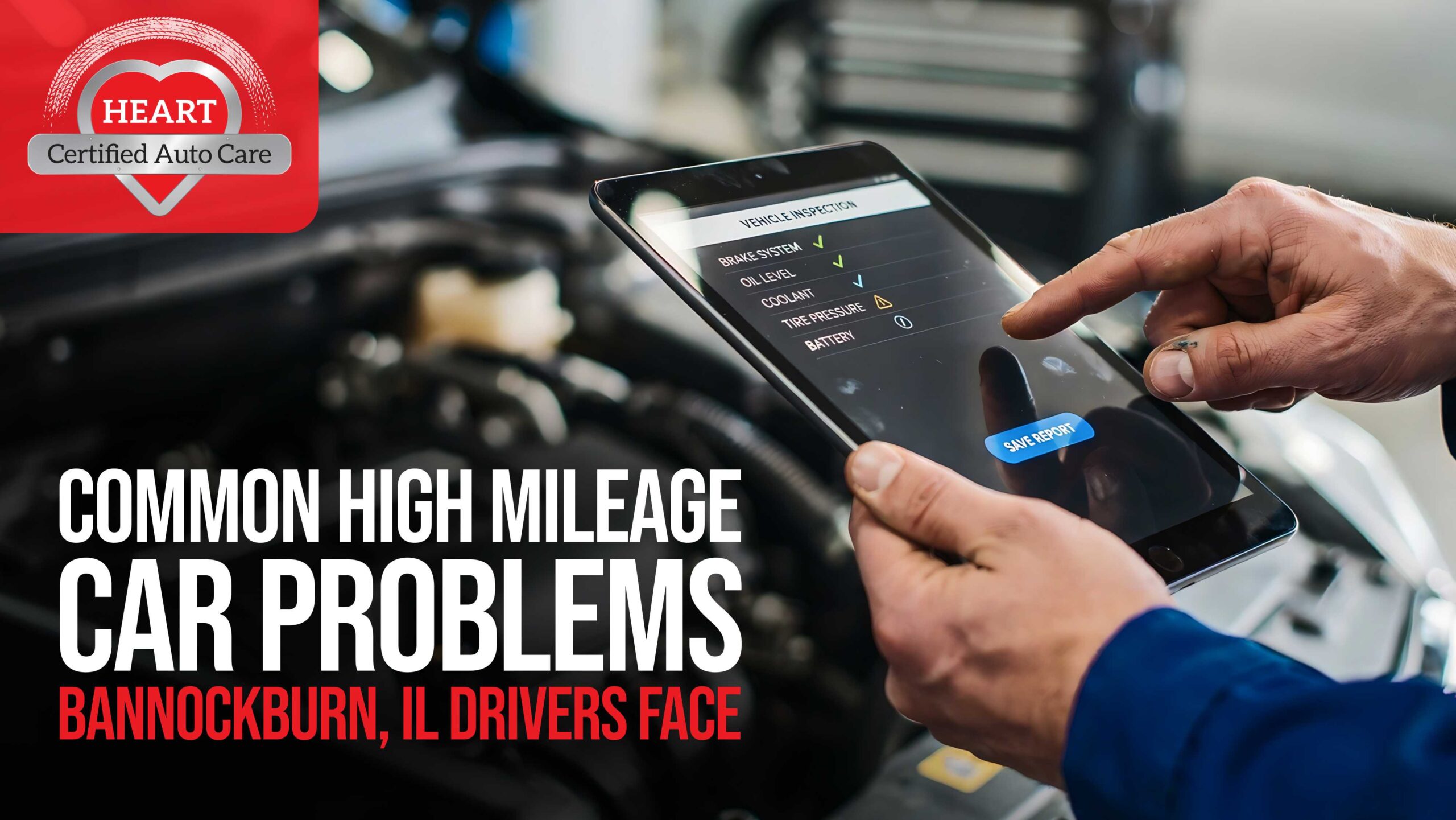
A car reaching 100,000 miles does not automatically mean it is nearing the end of its life. Plenty of well-maintained vehicles continue running reliably well past that mark. What changes is the type of attention your vehicle needs as rubber components age, fluids accumulate wear, and parts such as suspension components, belts, hoses, and seals become more likely to need service.
Knowing the high mileage car problems Bannockburn IL drivers may encounter can help you catch small symptoms before they turn into larger repair bills. Your vehicle’s mileage matters, but its maintenance history, driving habits, age, and current condition matter too.
The key is to look at the entire vehicle rather than assuming every repair is caused by mileage. A high-mileage car with a consistent maintenance history may be in better condition than a lower-mileage vehicle that has been neglected.
There is no single mileage number that suddenly makes a vehicle “high mileage.” Many automotive maintenance guides use 100,000 miles as a practical benchmark, while some technicians recommend paying closer attention as early as 75,000 to 90,000 miles.
The reason is simple. Parts experience repeated heat cycles, vibration, friction, pressure, and exposure to road conditions throughout the vehicle’s life. Rubber seals can harden, hoses can deteriorate, suspension bushings can wear, and fluids can become contaminated or lose some of their protective properties.
This is why car maintenance after 100,000 miles should focus on both scheduled maintenance and condition-based inspections. Your owner’s manual remains the starting point because service intervals vary by vehicle, engine, transmission, and driving conditions.
For Bannockburn drivers, seasonal temperature changes and regular stop-and-go driving can add to the demands placed on certain components. A vehicle that regularly makes short trips may experience a different wear pattern from one that spends most of its time on longer highway drives.


High mileage does not guarantee that any particular component will fail. It does, however, make certain types of wear worth watching more closely.
Oil-related problems become increasingly important as vehicles age. Gaskets and seals can harden, while internal engine wear can contribute to increased oil consumption.
You may notice a small spot on the driveway, a burning-oil smell, or a need to add oil between changes. A mechanic can determine whether the issue comes from a simple external leak or a more involved internal engine concern.
High-mileage oil formulations may also be appropriate for some older vehicles. These oils can contain additives designed to condition aging seals, but they do not replace a needed gasket or seal repair.
The cooling system deserves particular attention on an older vehicle. Water pumps, thermostats, radiator hoses, coolant, and related components all have service requirements that vary by vehicle.
Watch for an overheating gauge, coolant loss, a sweet smell, visible leaks, or unusual temperature fluctuations. Ignoring a cooling problem can turn a relatively contained repair into major engine damage.
Mopar’s high-mileage maintenance guidance, for example, recommends checking coolant and hoses regularly and replacing components according to vehicle-specific service requirements.
Aging suspension components can change how a car feels on the road. Worn shocks and struts may contribute to excessive bouncing, while deteriorated bushings, ball joints, or tie rods can produce clunks and changes in steering feel.
Pay attention if the vehicle pulls to one side, bounces excessively after a bump, develops uneven tire wear, or feels less stable during turns.
These symptoms can have several possible causes, so replacing a single component based on a symptom alone may not solve the underlying issue. A complete inspection can identify which parts actually need attention.
Brakes naturally wear as mileage accumulates. Pads, rotors, brake fluid, calipers, and other components all require inspection at appropriate intervals.
Grinding, squealing, vibration during braking, a soft pedal, or a vehicle pulling during braking deserves attention. Some brake problems develop gradually, so drivers should not wait for an obvious failure before having the system checked.
Brake service intervals vary widely depending on the vehicle and driving conditions. Mopar, for example, lists brake checks at oil-change intervals and notes that pad and rotor replacement depends on wear rather than one universal mileage number.
Transmission problems can become expensive, but high mileage alone does not mean a transmission is failing. Maintenance history and symptoms provide much more useful information.
Watch for slipping, delayed engagement, harsh shifting, unusual noises, fluid leaks, or changes that were not present previously.
Transmission fluid requirements also vary substantially among vehicles. Some manufacturers specify fluid changes, while others use longer intervals or different service procedures. Always follow the manufacturer’s specifications rather than assuming every transmission needs the same service.
Rubber components age even when a vehicle is not driven heavily. Heat, time, vibration, and exposure can cause cracking, swelling, hardening, or deterioration.
Inspecting belts and hoses becomes especially useful as mileage and vehicle age increase. A damaged serpentine belt, for example, can affect systems powered by the belt and leave you stranded if it fails.
The same principle applies to seals. A small seepage may require monitoring, while a significant leak needs diagnosis and repair.
Electrical problems can appear in older cars in several ways. You might notice slow cranking, dimming lights, intermittent electronics, warning lights, or accessories that stop working consistently.
The battery itself is only one possibility. An aging alternator, starter, wiring connection, fuse, ground, or sensor can create similar symptoms.
Rather than replacing parts based on guesswork, electrical diagnostics can help identify the actual source of the problem.
Tires remain a critical safety component regardless of vehicle mileage. High-mileage vehicles can develop uneven tire wear when alignment, suspension, steering, or tire-maintenance issues go unchecked.
Look for worn edges, cupping, vibration, pulling, or tread wear that differs from one tire to another.
If you notice unusual tire wear, consider having the tires and suspension inspected together. The tire may be showing evidence of a mechanical problem elsewhere.
Some problems are easier to catch when you know what to look and listen for. These symptoms do not always identify a specific failed part, but they are useful reasons to schedule an inspection.
Here are signs your high-mileage car needs repair:
These symptoms do not necessarily mean your vehicle needs a major repair. The sooner the cause is identified, the easier it is to distinguish routine wear from a problem that requires immediate attention.
A high-mileage vehicle benefits from a maintenance plan based on its actual condition. Instead of waiting for something to fail, keep track of previous services and have frequently worn systems inspected at appropriate intervals.
Here are practical habits that can help:
This approach makes high-mileage car maintenance in Bannockburn IL less about reacting to breakdowns and more about understanding the condition of the vehicle you already own.
There is no universal 100,000-mile checklist that applies to every car. The right service depends on the vehicle’s manufacturer recommendations, age, mileage, previous maintenance, and current condition.
A high-mileage inspection commonly gives attention to:
Some vehicles may also have scheduled timing belt, differential, transfer case, or other services. The specific requirements should come from the manufacturer’s service information.
This is where car maintenance after 100,000 miles becomes more individualized. Two vehicles with the same odometer reading can need completely different work because their service histories and driving conditions differ.

High mileage does not have to be something you dread every time you look at the odometer. The most useful approach is to know the vehicle’s maintenance history, watch for changes, and address developing problems before they become larger concerns.
For Bannockburn drivers, high-mileage car maintenance in Bannockburn IL can start with something simple: a careful inspection and an honest conversation about what your vehicle needs now, what can wait, and what should be monitored.
HEART Certified Auto Care serves drivers throughout Chicago’s North Shore, including Bannockburn, and its nearby locations in Evanston, Wilmette, Northbrook, and Libertyville provide options while the new Bannockburn location is being developed.
If your vehicle has passed 100,000 miles, you do not have to guess which repairs deserve attention. Start with the symptoms you have noticed, review the maintenance history, and have the systems that show signs of wear inspected.
Schedule an appointment with HEART Certified Auto Care at heartautocare.com and choose the location that works best for you. Drivers in Bannockburn can currently visit the nearby Evanston, Wilmette, Northbrook, or Libertyville locations, with a new Bannockburn location coming soon.


At HEART Certified Auto Care, we believe auto repair should feel honest, approachable, and stress-free — not confusing or intimidating. We’re not your typical repair shop. We take the time to explain what your car truly needs (and what it doesn’t), so you can make confident decisions without pressure.
Our experienced technicians focus on long-term vehicle health, preventative care, and clear communication. Whether you’re stopping in for routine maintenance or unexpected repairs, you’ll always be treated like family — with respect, transparency, and genuine care for your safety on the road.
With multiple convenient locations, HEART Certified Auto Care proudly serves drivers throughout Chicago’s North Shore and surrounding suburbs, providing dependable auto repair you can trust year after year.
Proudly Serving Local Communities Including:
Looking for dependable auto repair near you? Schedule an appointment with HEART Certified Auto Care today and experience the difference of local service done right.





Servicing Your Vehicle Has Never Been Easier
3 Year Warranty

Free Loaner Cars

98% Same Day Service

Transparent Pricing

Finance Options

Certified Technicians

Free Digital Inspection