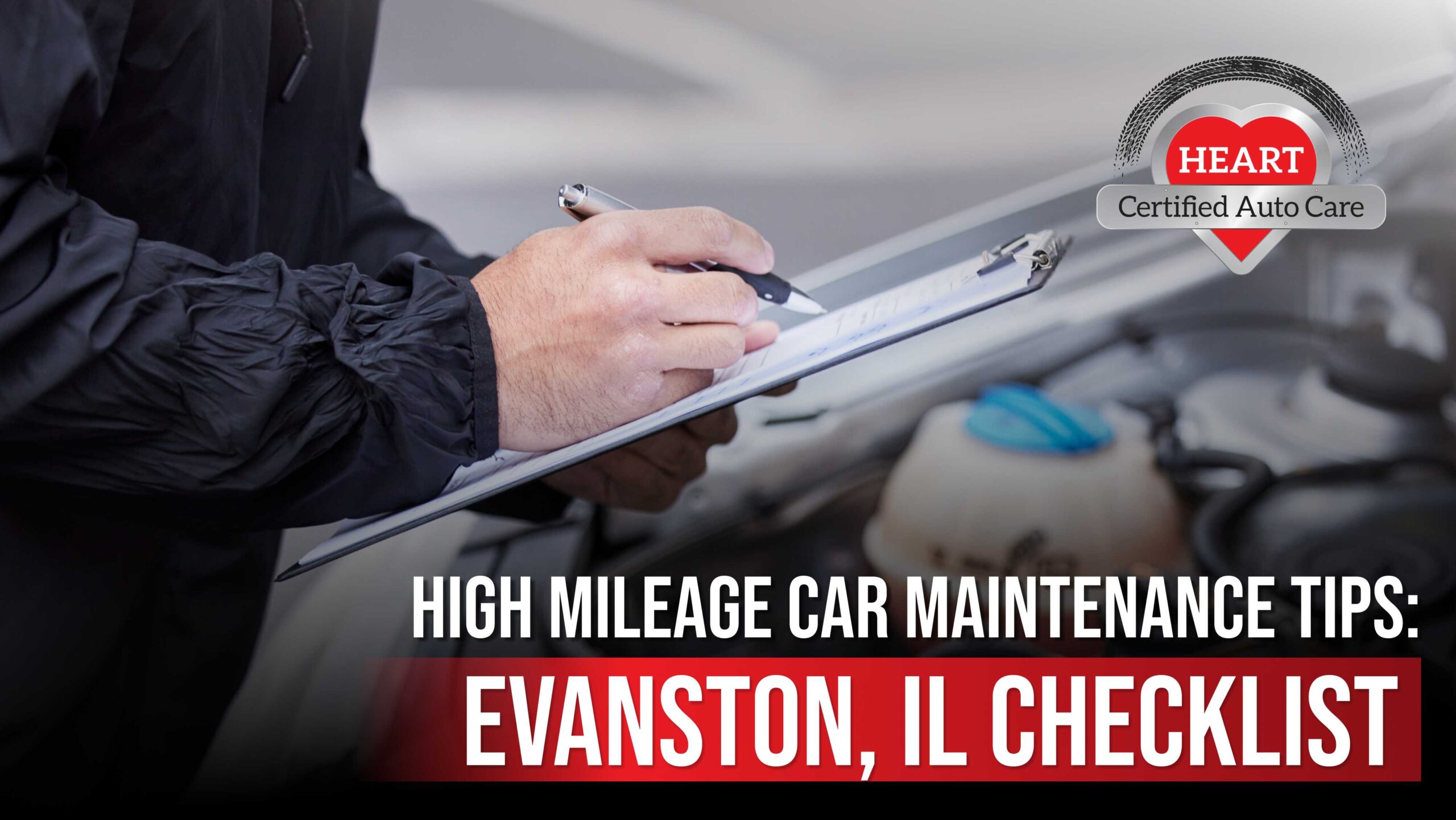
High Mileage Car Maintenance Tips: Evanston IL Checklist
A car with 100,000 miles on the odometer does not automatically mean it’s time to start shopping for another vehicle. With consistent maintenance, many older cars and SUVs can continue to serve their owners for years. The key is knowing which maintenance items deserve attention as mileage and vehicle age increase.
These high-mileage car maintenance tips Evanston, IL drivers can use will help you build a practical service plan based on mileage, vehicle condition, driving habits, and seasonal needs. For Evanston drivers, that means paying attention to tires, brakes, fluids, battery performance, suspension components, and other parts that are subject to regular city driving and changing weather.
TL;DR High Mileage Car Maintenance Tips Evanston IL
- Follow the manufacturer’s schedule – Your owner’s manual should guide mileage-based services because replacement intervals vary by vehicle.
- Inspect major systems at 100,000 miles – Check fluids, belts, hoses, brakes, tires, suspension, battery, filters, and scheduled ignition components.
- Pay attention to symptoms – Leaks, unusual noises, vibration, warning lights, hard starting, pulling, and changes in braking deserve prompt attention.
- Prepare for Evanston weather – Check tires, battery, cooling and heating systems, wipers, brakes, and fluids before colder weather arrives.
- Use inspections to plan repairs – A thorough inspection can help separate urgent safety repairs from maintenance that can be scheduled later.
What Counts as a High Mileage Car
There is no single mileage number that suddenly makes a vehicle “high mileage.” Many maintenance guides use 100,000 miles as an important checkpoint, while vehicles at 150,000 or 200,000 miles generally require closer attention to age-related wear.
Modern vehicles can often travel well past 100,000 miles when owners keep up with scheduled maintenance. Consumer Reports notes that reaching 200,000 miles can be a worthwhile ownership goal when the vehicle has been properly maintained.
The service history can matter as much as the odometer. A 120,000-mile SUV with regular oil changes, documented repairs, and timely fluid service may be in better shape than a 70,000-mile vehicle that has missed years of maintenance.
For first-time car owners, this is an important distinction. Do not assume that a high mileage vehicle needs every possible part replaced at once. Start with the manufacturer’s maintenance schedule, review what has already been completed, then inspect components that show signs of wear.
High Mileage Car Maintenance Tips Evanston IL Drivers Should Follow
High-mileage vehicles benefit from a more organized maintenance routine. Instead of waiting for a component to fail, use mileage milestones and changes in vehicle behavior to decide when to inspect key systems.
Here are the areas worth putting near the top of your car maintenance checklist in Evanston IL.
- Engine oil and filter – Continue oil service according to the interval and oil specification listed for your vehicle. Older engines can develop leaks or consume oil, so checking the level between services becomes increasingly useful.
- Coolant and cooling system – Inspect coolant condition, hoses, the radiator, thermostat, and related components according to the manufacturer’s schedule. An aging cooling system deserves attention because overheating can cause serious engine damage.
- Transmission fluid – Check your owner’s manual for the correct service interval and fluid specification. Automatic, CVT, and manual transmissions have different requirements, so avoid assuming that one interval applies to every vehicle.
- Spark plugs and ignition components – Some spark plugs can last close to 100,000 miles, but the correct interval depends on the engine. Worn plugs can contribute to misfires, rough running, poor fuel economy, and increased emissions.
- Belts and hoses – Rubber components age from heat, mileage, and time. Look for cracking, fraying, swelling, soft spots, or other visible damage during inspections.
- Brakes – Have brake pads, rotors, brake fluid, calipers, hoses, and related components inspected. Grinding, pulling, vibration, or a soft pedal should not be ignored.
- Tires and alignment – Check tread depth, pressure, age, wear patterns, and alignment. Uneven wear can point to alignment or suspension problems that may shorten tire life.
- Battery and charging system – An aging battery can become especially troublesome when temperatures drop. Testing the battery and charging system before winter can help identify a weak electrical system.
- Suspension and steering – Shocks, struts, bushings, ball joints, tie rods, and other components can wear gradually. Clunks, excessive bouncing, steering changes, or uneven tire wear can signal a problem.
- Filters and fluid levels – Engine air filters, cabin air filters, brake fluid, coolant, and other service items should be checked according to your vehicle’s schedule and condition.
These items form the foundation of high-mileage car maintenance in Evanston IL, but they do not all need replacement at the same time. A good technician should distinguish between something that needs immediate repair, something that is due for scheduled maintenance, and something that simply needs monitoring.
What Should Be Checked at 100,000 Miles
The 100,000-mile mark is a useful opportunity for a comprehensive inspection, especially if you recently purchased a used car or cannot confirm its service history.
Current 2026 maintenance guides commonly recommend reviewing oil, filters, coolant, transmission service, spark plugs, belts, brakes, tires, suspension, battery, and other vehicle-specific items around major mileage milestones.
A 100,000-mile service in Evanston IL should start with your vehicle’s exact maintenance requirements rather than a universal list.
- Review the service records – Find receipts, maintenance stickers, digital records, or previous inspection reports. Knowing what was already completed can prevent duplicate work and reveal overdue services.
- Check timing belt requirements – If your engine uses a timing belt, verify the manufacturer’s replacement interval and whether the belt has already been replaced. Do not assume every vehicle uses a belt or requires replacement at the same mileage.
- Inspect the cooling system – Check coolant, hoses, the radiator, water pump, thermostat, and signs of leakage. Cooling problems can become expensive quickly if they lead to overheating.
- Evaluate the brakes and tires – Measure brake wear and inspect tire condition rather than judging them by appearance alone. Uneven tire wear can also point toward alignment or suspension concerns.
- Inspect suspension and steering – High-mileage cars may develop worn bushings, shocks, struts, ball joints, or steering components. These parts affect handling, ride quality, tire wear, and safety.
- Test the battery and charging system – A battery can weaken without giving much warning. Testing the battery, alternator, and starting system gives you useful information before cold weather puts extra demand on the electrical system.
- Check leaks and fluid condition – Look for oil, coolant, transmission fluid, brake fluid, and other leaks. Small seepage may only require monitoring, while an active leak can require prompt repair.
The goal of a 100,000-mile inspection is not to create a long repair list. It is to establish a clear picture of the vehicle’s current condition and decide what deserves attention first.
How Often Should a High Mileage Car Be Serviced
Your owner’s manual should remain the primary source for mileage and time-based service intervals. Some vehicles use maintenance reminder systems, while others provide specific mileage or calendar schedules.
Your driving conditions can also affect maintenance needs. Frequent short trips, stop-and-go traffic, towing, heavy loads, rough roads, and extreme temperatures can place additional stress on vehicle systems.
For a practical car maintenance checklist in Evanston IL, consider this approach:
- Check your owner’s manual – Record the current mileage and identify upcoming factory-recommended services.
- Review what has already been completed – Mark confirmed services rather than assuming they were done.
- Inspect condition-based components – Look at brakes, tires, suspension, belts, hoses, fluids, and visible leaks.
- Track recurring maintenance – Keep receipts and record the mileage after each service.
- Plan upcoming work – If an inspection identifies a worn component that is still safe, schedule it before it becomes an emergency.
This approach can make ownership easier for first-time car owners. Instead of reacting to every noise or warning light, you have a maintenance plan that tells you what has been done and what needs attention next.
Evanston Weather Makes Seasonal Checks Worthwhile
Evanston drivers deal with hot summers, cold winters, freezing temperatures, snow, and changing road conditions. Seasonal inspections can help catch problems before they become inconvenient or unsafe.
Fall is an especially useful time to review your vehicle because winter places extra demands on tires, batteries, brakes, heating systems, and windshield visibility.
- Test the battery – Cold temperatures can make starting harder for a weak battery. A battery and charging-system test before winter can give you time to replace a failing unit on your schedule.
- Check tire pressure – Tire pressure changes with temperature, so check it regularly as the weather cools. Use the pressure listed on the vehicle’s door-jamb label rather than the maximum number printed on the tire.
- Inspect tread and tire wear – Look for uneven wear, cracks, bulges, and low tread. If the car pulls or the steering wheel sits off-center, have the alignment checked.
- Test brakes – Winter driving requires dependable braking and traction. Have unusual noises, vibration, pulling, or changes in pedal feel inspected before snow and ice arrive.
- Check the heater and defroster – A functioning heating and defrosting system helps maintain visibility during cold weather. If the system takes too long to warm up or the defroster performs poorly, have it checked.
- Replace worn wipers – Older wiper blades can leave streaks and reduce visibility during rain or snow. Clear visibility matters even more when road spray and winter precipitation are present.
- Check fluids – Verify coolant, windshield washer fluid, engine oil, and other applicable fluids. Use the correct fluid type and mixture specified for your vehicle.
These checks fit naturally into high-mileage auto repair in Evanston IL because older vehicles often have several systems reaching different stages of wear at the same time. A seasonal inspection can help you prioritize those concerns instead of discovering them during a winter commute.
What Warning Signs Should High Mileage Car Owners Watch For
A high-mileage vehicle does not need to drive perfectly forever, but changes in its behavior deserve attention. Small symptoms can sometimes provide an early clue that a component needs inspection.
Watch for:
- New warning lights – Do not ignore check engine, battery, oil pressure, temperature, ABS, or other warning indicators. The correct response depends on the light and the vehicle’s symptoms.
- Fluid spots under the vehicle – A small spot may identify an oil, coolant, transmission, or other fluid leak. The color and location can provide clues, but a professional inspection can identify the source.
- Unusual noises – Grinding, knocking, rattling, humming, squealing, or clicking can point to different mechanical problems. Note when the noise happens, such as during braking, turning, accelerating, or starting.
- Changes in steering – Pulling, wandering, vibration, or an off-center steering wheel can indicate tire, alignment, steering, or suspension concerns.
- Hard starting – Slow cranking or repeated attempts to start can point toward battery, starter, charging, fuel, or ignition issues.
- Changes in braking – A soft pedal, grinding, vibration, pulling, or longer stopping distance deserves prompt attention.
- Overheating – A rising temperature gauge, coolant warning, steam, or repeated coolant loss should be addressed promptly. Continuing to drive an overheating vehicle can cause severe engine damage.
A high-mileage car maintenance shop in Evanston IL can help diagnose symptoms before you approve repairs. Bring as much information as possible, including when the symptom started, how often it happens, and whether weather or driving conditions affect it.

High Mileage Car Maintenance Tips Evanston IL With HEART
High mileage does not automatically mean your car has reached the end of its useful life. The better question is whether the vehicle has received the right maintenance and whether its major systems remain in good condition.
For Evanston drivers, a practical maintenance plan should combine your manufacturer’s schedule with regular inspections and seasonal checks. If your car is approaching 100,000 miles or has already passed that point, HEART Certified Auto Care can help you identify what needs attention and what can continue to be monitored.
If your older car or SUV needs an inspection, scheduled maintenance, brake or tire service, or another repair, schedule an appointment with HEART Certified Auto Care. The Evanston location is at 2620 Green Bay Rd, and HEART also has locations in Wilmette, Northbrook, and Libertyville.
You can review HEART’s full range of maintenance and repair services or choose the location closest to you when booking.
Auto Repair & Maintenance Near You

Auto Repair That Actually Cares
At HEART Certified Auto Care, we believe auto repair should feel honest, approachable, and stress-free — not confusing or intimidating. We’re not your typical repair shop. We take the time to explain what your car truly needs (and what it doesn’t), so you can make confident decisions without pressure.
Our experienced technicians focus on long-term vehicle health, preventative care, and clear communication. Whether you’re stopping in for routine maintenance or unexpected repairs, you’ll always be treated like family — with respect, transparency, and genuine care for your safety on the road.
With multiple convenient locations, HEART Certified Auto Care proudly serves drivers throughout Chicago’s North Shore and surrounding suburbs, providing dependable auto repair you can trust year after year.
Proudly Serving Local Communities Including:
Looking for dependable auto repair near you? Schedule an appointment with HEART Certified Auto Care today and experience the difference of local service done right.
Proud to Partner With Our Local Chambers of Commerce
Rooted in the Communities We Serve
What HEART Offers
Servicing Your Vehicle Has Never Been Easier
3 Year Warranty
Free Loaner Cars

98% Same Day Service

Transparent Pricing

Finance Options

Certified Technicians
Free Digital Inspection