


3 Year Warranty


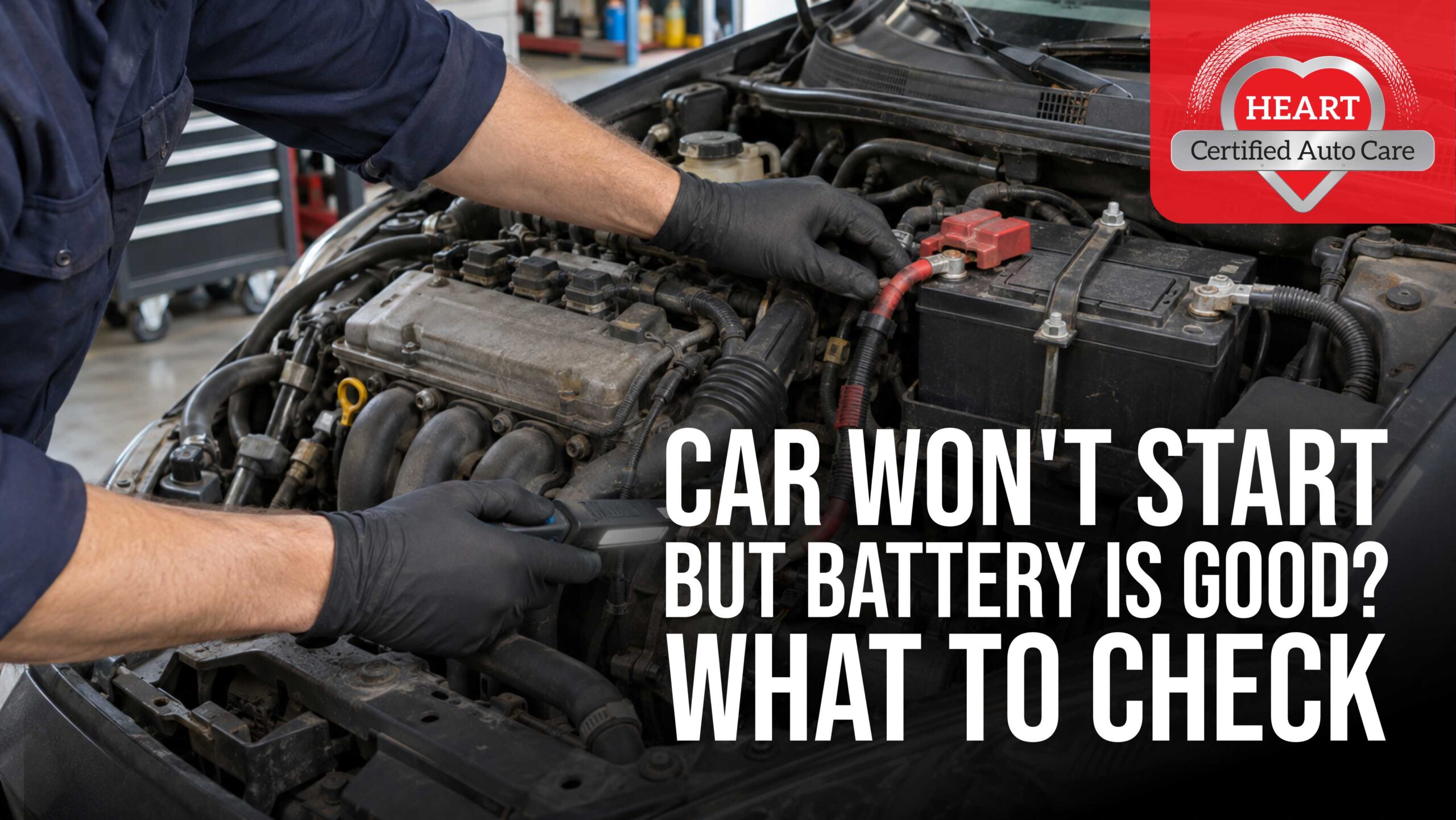
You turn the key or press the start button, expecting your car to fire up, but nothing happens. The dashboard lights work, the radio comes on, and the battery seems fine. So why won’t the engine start?
When your car won’t start but battery is good, the problem may involve the starter motor, electrical connections, fuel delivery, ignition system, or an engine sensor. The right solution depends on what happens when you try to start the vehicle.
For car owners, SUV drivers, and first-time vehicle owners, understanding these warning signs can help narrow down the cause and prevent unnecessary parts replacement. This guide explains what to check first, which symptoms matter, and when to contact a professional mechanic.
A working battery supplies electrical power, but several other components must function correctly before the engine starts. The starter must turn the engine, the fuel system must deliver fuel, and the ignition and engine management systems must operate as intended.
A battery can also appear healthy without passing a proper test under load. Bright headlights or a recent battery replacement do not rule out a weak battery, damaged cables, or a faulty connection.
The first step is to identify which of these two situations applies to your vehicle.
A no-crank condition occurs when the engine does not turn over after you turn the key or press the start button. You may hear a click, repeated clicking, or nothing at all.
Possible causes include a failed starter motor, loose electrical connections, a faulty relay, a damaged fuse, or a problem with the ignition switch or vehicle security system.
In this situation, the starter turns the engine, but the engine never runs independently. This changes the direction of the diagnosis because the starter is already performing its basic function.
Possible causes include inadequate fuel delivery, ignition failure, a faulty crankshaft position sensor, or an immobilizer problem. A mechanic may also need to investigate engine timing or compression.


Pay attention to what happens when you attempt to start the vehicle. These clues can help you describe the problem accurately without guessing which component has failed.
Clicking can provide useful information about the starting circuit. However, the sound alone cannot confirm which part needs replacement.
Note whether the sound changes when you try again. Repeated attempts can drain the battery and put additional strain on the starting system, so avoid continuing if the vehicle does not respond.
Even when a battery tests well, electricity still needs a clear path to the starter. Corrosion, loose clamps, damaged cables, and poor engine ground connections can interrupt that path.
If the battery is safely accessible, look for obvious corrosion, damaged insulation, or a terminal that appears loose. Do not touch exposed wiring or attempt to disconnect the battery if you are unsure how to do so safely.
Keep these points in mind during your inspection.
A technician can measure voltage drop across the positive cable and ground path while the starting system operates. This test helps reveal resistance that a simple visual inspection may miss.
The starter motor uses electrical energy to turn the engine until combustion can keep it running. If the starter or its solenoid fails, the engine may not crank even when the battery has sufficient power.
Common warning signs include a single click, intermittent starting, or complete silence despite normal dashboard power. Some starter failures also produce grinding noises, which may indicate a problem involving the starter drive or flywheel.
Do not assume every clicking sound means you need a new starter. Battery condition, cable resistance, ground connections, and the signal reaching the starter should be checked before replacing the component.
The ignition switch or start button tells the vehicle to begin the starting process. Depending on the vehicle, relays, fuses, wiring, and control modules must also work correctly.
If the dashboard lights illuminate but the engine does not respond, the starting command may not be reaching the starter. A faulty relay, blown fuse, damaged wire, or failing ignition switch could explain the symptom.
You can consult the owner’s manual for the correct fuse information, but replace a fuse only with the specified type and rating. If a replacement fuse blows again, stop and arrange an electrical inspection rather than installing a higher-rated fuse.
If your car cranks normally but will not start, investigate whether the engine receives fuel as expected. A failed fuel pump, faulty pump relay, restricted fuel filter, or fuel delivery problem may prevent combustion.
Start with simple observations, such as checking the fuel gauge and confirming that the vehicle has enough fuel. A faulty gauge can be misleading, so do not rely on it alone if the car has been driven for a long distance since the last refill.
Listen for unusual changes in the vehicle’s behavior, but remember that not hearing a fuel pump does not automatically prove it has failed. Some vehicles operate their pumps quietly or only briefly when the ignition is switched on.
A mechanic can check fuel pressure and pump operation to determine whether the engine receives the required supply. Avoid opening fuel lines or attempting fuel pressure tests yourself because pressurized fuel presents a fire and injury risk.
Your engine needs correctly timed ignition and accurate sensor information to start and run. Worn spark plugs, failed ignition coils, or a faulty crankshaft position sensor can interfere with that process.
A crankshaft position sensor helps the engine control module determine the crankshaft’s position and speed. If the module cannot obtain a usable signal, it may not control fuel injection or ignition correctly.
Other clues may include a check engine light, intermittent stalling, difficult starting, or an engine that cranks normally without firing. A diagnostic scan can reveal stored fault codes, although the code alone may not identify the failed component.
Avoid replacing a sensor based solely on a generic code description. Proper diagnosis may require checking wiring, connector condition, live sensor data, and related components.
Modern vehicles often use an electronic immobilizer to prevent unauthorized starting. If the vehicle cannot recognize the key or key fob, it may prevent the engine from starting.
Look for a flashing security indicator or a dashboard message about key recognition. If your vehicle has a spare key, try it according to the owner’s manual instructions.
For a push-button start vehicle, the key fob may have a weak battery even when the vehicle’s main battery is healthy. Some models provide a designated location where you can hold the fob to start the vehicle when its battery is weak.
If the security warning remains or the vehicle still refuses to start, professional diagnosis may be necessary. Do not attempt to bypass the immobilizer or tamper with security wiring.
The following guide can help you communicate the problem to a technician. Treat each symptom as a diagnostic clue rather than proof that a particular part has failed.
| What happens | Possible causes | What to do next |
|---|---|---|
| One loud click | Starter, solenoid, cable resistance | Arrange starting-system testing |
| Rapid clicking | Low voltage, poor terminals, weak ground | Check battery condition and connections |
| No sound when starting | Relay, fuse, ignition circuit, immobilizer | Check dashboard messages and seek diagnosis |
| Engine cranks but will not start | Fuel, ignition, sensors, timing | Arrange engine diagnostics |
| Starts with a jump but fails again | Battery, charging system, loose connections, parasitic drain | Have the battery and charging system tested |
| Starts and then stalls | Fuel delivery, sensor, electrical or security fault | Avoid repeated attempts and arrange inspection |
A vehicle that starts after a jump may still have an underlying electrical or charging problem. Likewise, a new battery will not fix a failed starter or an engine that lacks fuel or spark.
The most useful information you can give a mechanic is what the vehicle did before the failure, what you hear when starting it, and whether any dashboard warnings appeared.
There are a few simple checks you can perform before arranging service, provided the vehicle is parked safely and you can inspect it without touching hazardous components.
Stop if you smell fuel, see smoke, notice a burning odor, or find a swollen, leaking, or damaged battery. Do not attempt to jump-start a damaged battery, bypass starter wiring, or work beneath a vehicle that is not properly supported.
If these basic checks do not reveal an obvious issue, further testing is usually more useful than buying replacement parts.

When your car refuses to start, a confirmed healthy battery is a useful clue, but it does not identify the underlying fault. Paying attention to the starting sound, dashboard warnings, and recent vehicle behavior can help a technician narrow down the possibilities.
HEART Certified Auto Care can help drivers determine the next steps when a vehicle has a no-start problem. Professional testing can reduce guesswork and help you make an informed repair decision.
If your car won’t start and the battery appears to be in good condition, contact HEART Certified Auto Care to discuss the symptoms and arrange an inspection. Visit heartautocare.com to request an appointment and find the location that best serves you in Evanston, Wilmette, Northbrook, or Libertyville.


At HEART Certified Auto Care, we believe auto repair should feel honest, approachable, and stress-free — not confusing or intimidating. We’re not your typical repair shop. We take the time to explain what your car truly needs (and what it doesn’t), so you can make confident decisions without pressure.
Our experienced technicians focus on long-term vehicle health, preventative care, and clear communication. Whether you’re stopping in for routine maintenance or unexpected repairs, you’ll always be treated like family — with respect, transparency, and genuine care for your safety on the road.
With multiple convenient locations, HEART Certified Auto Care proudly serves drivers throughout Chicago’s North Shore and surrounding suburbs, providing dependable auto repair you can trust year after year.
Proudly Serving Local Communities Including:
Looking for dependable auto repair near you? Schedule an appointment with HEART Certified Auto Care today and experience the difference of local service done right.





Servicing Your Vehicle Has Never Been Easier
3 Year Warranty

Free Loaner Cars

98% Same Day Service

Transparent Pricing

Finance Options

Certified Technicians

Free Digital Inspection