



3 Year Warranty
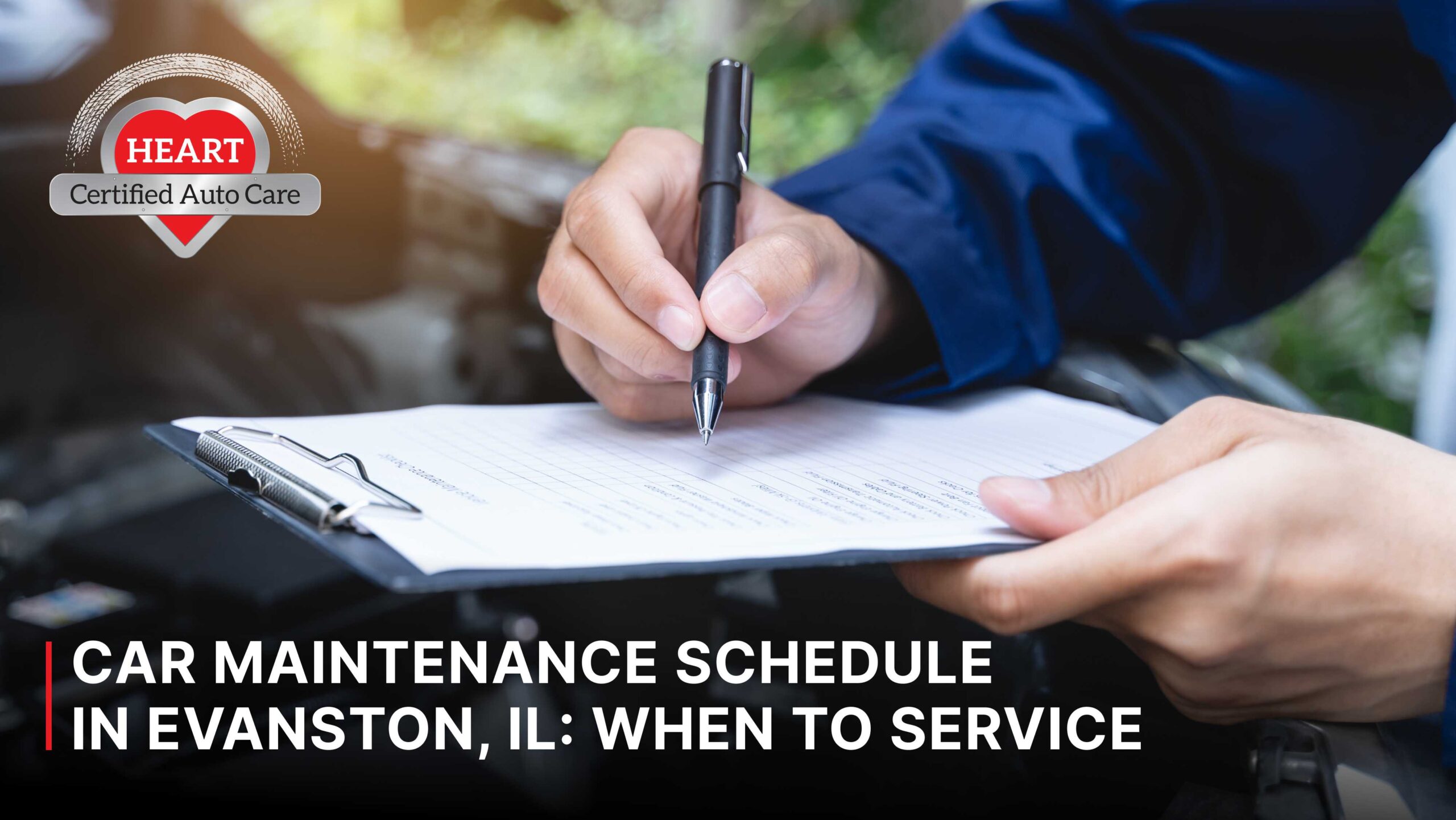
Keeping up with your car’s maintenance can feel confusing, especially when different services come due at different mileage points. A clear car maintenance schedule in Evanston IL can help you know what to check, what to ask your mechanic, and which services deserve attention first.
Your vehicle’s owner’s manual should always be the main reference for exact service intervals. Still, a general schedule gives you a useful starting point, especially if you are a first-time car owner, drive an SUV, or recently bought a used vehicle.
For drivers in Evanston, local driving conditions can also affect how quickly certain components wear. Cold winters, potholes, short trips, stop-and-go traffic, and frequent city driving can all influence tires, brakes, batteries, suspension components, and other systems.
A car maintenance schedule is a plan that outlines when to inspect, service, replace, or monitor various parts of your vehicle. Manufacturers usually organize recommended maintenance around mileage, time, or both.
For example, your vehicle may call for certain routine services at specific mileage intervals, while other items have longer replacement intervals. Some newer vehicles also use maintenance reminders or oil-life monitoring systems.
A car maintenance checklist in Evanston IL should therefore work alongside your manufacturer’s schedule rather than replace it.
A typical maintenance plan may include:
The best scheduled car maintenance in Evanston IL combines the manufacturer’s recommendations with the actual condition and use of your vehicle.
There is no single mileage number that applies to every car. A newer hybrid, an older SUV, and a compact sedan can have very different maintenance requirements.
Your owner’s manual should take priority, but the following framework can help you understand how maintenance often gets organized.
Depending on your vehicle, this may be a common point for an oil and filter service, tire inspection, tire rotation, fluid checks, and a general inspection. Some vehicles have longer oil intervals, so check your manufacturer’s recommendation first.
This is also a useful opportunity to look for uneven tire wear, brake wear, fluid leaks, worn wiper blades, and other developing problems.
A 10,000-mile service may involve many of the same basic checks, along with additional inspections based on your vehicle’s maintenance schedule.
If you drive mostly in town, make frequent short trips, or regularly encounter heavy traffic, tell your technician. Your driving pattern can provide useful context when evaluating maintenance needs.
Some vehicles require additional services at this mileage. Depending on the make and model, these may include filter replacement, fluid service, spark plug replacement, or more detailed inspections.
Do not automatically approve every service labeled a “30,000-mile service.” Ask which items your vehicle’s manufacturer actually recommends and why each item applies to your car.
At this point, maintenance may become more involved. Certain vehicles may require spark plug replacement, transmission service, coolant service, drive belt inspection, or other scheduled work.
This is also a good time to review the vehicle’s maintenance history. A service record makes it much easier to identify overdue items and avoid paying for maintenance that was recently completed.
High-mileage vehicles need continued attention rather than a completely different approach to maintenance. Components such as belts, hoses, suspension parts, wheel bearings, cooling-system components, and other systems may require closer inspection as the vehicle ages.
Your maintenance plan should focus on the manufacturer’s schedule and the vehicle’s actual condition.


A useful routine auto maintenance in Evanston IL plan covers several systems instead of focusing only on oil changes. Regular inspections give you a better picture of the vehicle as a whole.
Here are some of the areas worth tracking.
Do not treat every inspection finding as an emergency repair. A good technician should explain the condition, the potential consequences of postponing the work, and the appropriate timeline.
Your vehicle maintenance services in Evanston IL should account for how and where you drive. Two cars with identical mileage can have very different maintenance needs if their owners use them differently.
Cold weather deserves special attention. Low temperatures can place additional demands on batteries, reduce tire pressure, and affect fluids and other vehicle systems.
Road conditions also matter. Potholes and rough pavement can contribute to wheel, tire, alignment, and suspension problems. If your steering suddenly feels different after hitting a pothole, have the vehicle inspected rather than assuming the change will resolve on its own.
Stop-and-go driving creates another consideration. Frequent braking and acceleration can place greater demand on brakes and other components than steady highway driving does.
Short trips can also affect maintenance. If you frequently drive only a few miles at a time, the engine may spend more of its operating time warming up rather than reaching its normal operating conditions.
For Evanston drivers, a practical seasonal check can include:
A seasonal review does not replace your manufacturer’s maintenance schedule. It gives you another practical checkpoint for catching problems that may develop from local driving conditions.

A reliable car maintenance schedule in Evanston IL helps you stay ahead of routine service. Follow your owner’s manual, keep service records, and pay attention to changes in how your vehicle drives.
Evanston’s weather and road conditions can also affect tires, brakes, suspension, and batteries. HEART Certified Auto Care offers a free 33-point digital inspection, same-day service for about 98% of services, and a 3-year/36,000-mile nationwide warranty on qualifying repairs.
If you are unsure what your car needs, visit HEART Certified Auto Care for clear recommendations. With locations in Evanston, Wilmette, Northbrook, and Libertyville, HEART makes routine maintenance and repairs convenient for North Shore drivers.
Visit heartautocare.com to request an appointment.


At HEART Certified Auto Care, we believe auto repair should feel honest, approachable, and stress-free — not confusing or intimidating. We’re not your typical repair shop. We take the time to explain what your car truly needs (and what it doesn’t), so you can make confident decisions without pressure.
Our experienced technicians focus on long-term vehicle health, preventative care, and clear communication. Whether you’re stopping in for routine maintenance or unexpected repairs, you’ll always be treated like family — with respect, transparency, and genuine care for your safety on the road.
With multiple convenient locations, HEART Certified Auto Care proudly serves drivers throughout Chicago’s North Shore and surrounding suburbs, providing dependable auto repair you can trust year after year.
Proudly Serving Local Communities Including:
Looking for dependable auto repair near you? Schedule an appointment with HEART Certified Auto Care today and experience the difference of local service done right.





Servicing Your Vehicle Has Never Been Easier
3 Year Warranty

Free Loaner Cars

98% Same Day Service

Transparent Pricing

Finance Options

Certified Technicians

Free Digital Inspection