



3 Year Warranty


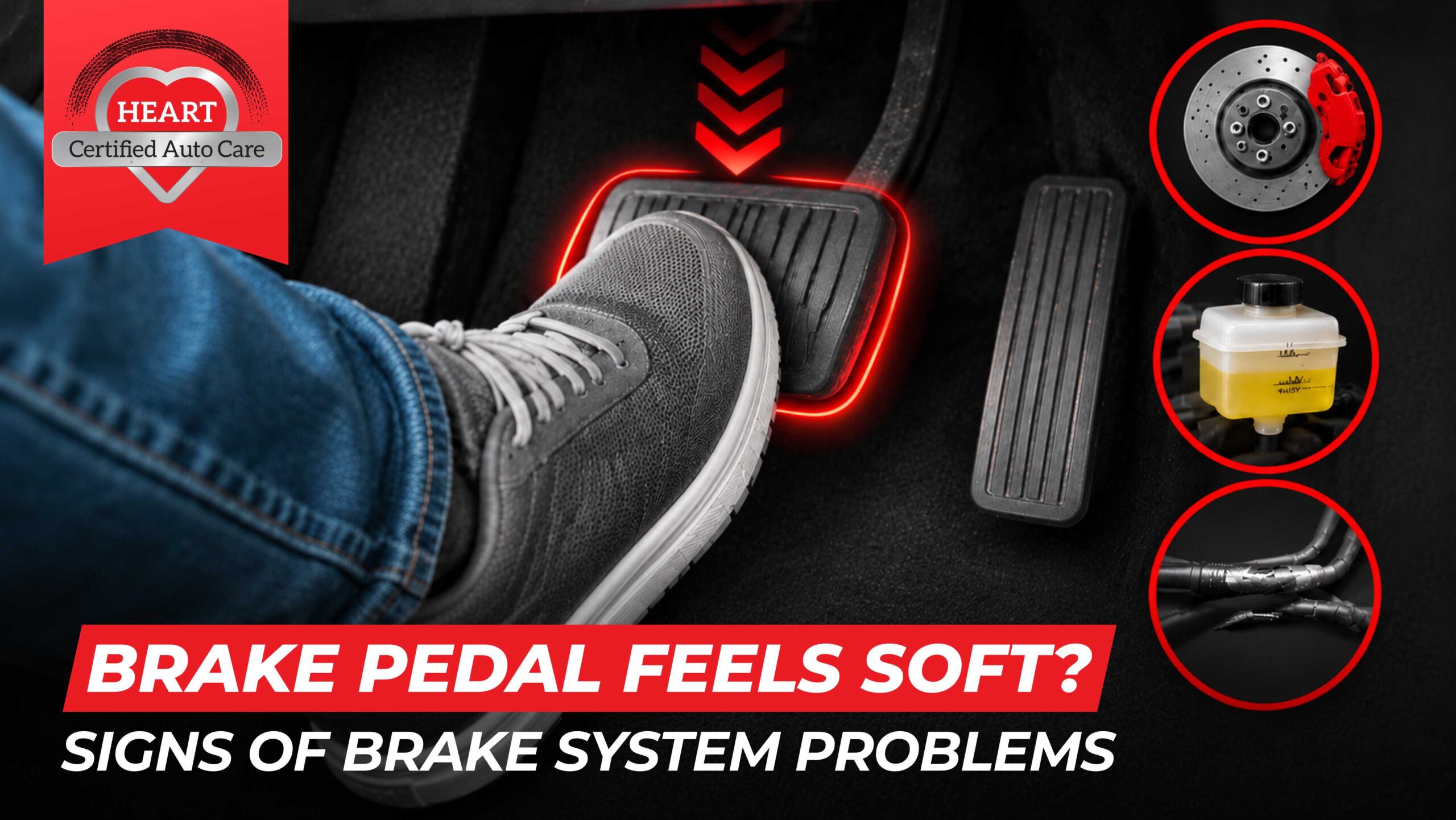
When your brake pedal feels soft, spongy, or lower than usual, it can be a warning that something is wrong with your braking system. You might notice that the pedal sinks farther toward the floor, requires extra pressure, or feels different when stopping at a traffic light. These changes deserve attention because reliable braking depends on the system building and maintaining the correct hydraulic pressure.
A soft pedal can develop after brake service, a fluid leak, or a problem with a hydraulic component. Some causes require immediate attention, especially when stopping power has decreased. Knowing the warning signs can help you decide what to do next and explain the symptoms clearly to a mechanic.
A brake pedal should offer consistent resistance and allow you to slow down predictably. When it feels unusually soft, spongy, or low, the braking system may be struggling to build or maintain hydraulic pressure.
Most conventional hydraulic braking systems use brake fluid to transfer force from the pedal to the brakes at each wheel. Because liquid transfers pressure effectively, trapped air, escaping fluid, or a failing component can interfere with this process.
The exact cause depends on how the pedal behaves and what other symptoms appear.
For example, a pedal that feels springy may point toward air in the hydraulic system. A pedal that slowly sinks while you maintain steady pressure can indicate a master cylinder problem or another source of hydraulic pressure loss.
Neither symptom confirms a specific failed part on its own. A proper inspection is needed to identify the cause.
Several brake system problems can change pedal feel. Understanding the possibilities can help you recognize why an inspection matters.
Brake fluid transfers pressure through the hydraulic system, while air compresses when pressure is applied. When air enters the lines, more pedal movement may be needed before the brakes respond firmly.
A spongy brake pedal is a common symptom of trapped air. This can happen after hydraulic repairs, an improper bleeding procedure, or a fluid leak that allows air into the system.
A technician may need to bleed the brakes to remove the air. However, if a leak caused the problem, that leak must be repaired first. Simply bleeding the brakes will not resolve the underlying fault if air continues to enter the system.
Brake fluid helps the braking system transmit pressure to the wheels. When the fluid level drops too far, the system may struggle to operate correctly.
A brake fluid leak can develop at a brake line, flexible hose, caliper, wheel cylinder, or master cylinder. Depending on the location and severity, you might notice fluid near a wheel, a warning light, or a pedal that travels farther than normal.
Low fluid does not automatically mean there is a leak. Worn brake pads can also contribute to a gradual drop in reservoir level as the caliper pistons extend. A sudden or substantial drop, however, needs prompt investigation.
Do not simply top off the reservoir and continue driving. The mechanic needs to determine why the level changed and verify that the braking system can maintain pressure safely.
The master cylinder converts force from your foot into hydraulic pressure. If its internal seals wear out or fail, fluid can bypass the internal sealing surfaces, making it difficult to maintain pressure.
One warning sign is a pedal that gradually sinks toward the floor while you hold it down. The reservoir might not show an obvious loss of fluid because an internal failure does not always produce an external leak.
A brake master cylinder problem can affect the system’s ability to maintain braking pressure. A technician may need to test the master cylinder and inspect related hydraulic components before recommending a replacement.
Flexible brake hoses carry fluid between the vehicle’s body and moving wheel assemblies. Age, heat, wear, and environmental exposure can damage these hoses.
A weakened hose may expand under pressure, reducing the firmness of the pedal. Internal deterioration can also restrict fluid movement and cause other braking problems.
During an inspection, a mechanic should check the hoses for cracks, swelling, leaks, and other signs of damage. Visible condition alone may not reveal every internal fault.
A soft pedal that appears after replacing brake pads, rotors, calipers, or other components deserves a follow-up inspection.
Air may have entered the hydraulic system during service, or the bleeding procedure may not have been completed correctly. Certain vehicles with ABS also require a manufacturer-specific bleeding procedure, sometimes involving a suitable diagnostic scan tool.
Other problems, including excessive component movement or incorrect adjustment on applicable brake designs, can increase pedal travel.
Do not assume that the pedal will return to normal after a few days. Contact the repair shop and describe the change before driving the vehicle again.
A change in brake pedal feel can occur alongside other symptoms. These additional clues may indicate that the system cannot stop the vehicle reliably.
Watch for the following warning signs:
If any of these signs appear with a soft pedal, treat the situation as a potential braking emergency. Pull over safely, avoid testing the brakes on public roads, and arrange a tow or suitable recovery service.
A reliable diagnosis involves checking the complete braking system rather than replacing parts based on one symptom. A mechanic will consider the pedal behavior, fluid condition, recent repairs, warning lights, and vehicle-specific service information.
A typical inspection may include the following steps.
The technician checks the reservoir level and examines the fluid for signs of contamination or other concerns. If the level is low, the next step is to determine why rather than automatically adding more fluid.
Brake lines, hoses, calipers, wheel cylinders where fitted, and master cylinder areas may be inspected for fluid loss. Some leaks are difficult to see without examining the relevant components closely.
If the pedal sinks or pressure cannot be maintained, the technician may perform tests to determine whether the master cylinder or another hydraulic component is responsible.
A brake master cylinder should not be replaced based on pedal feel alone. Test results and inspection findings help establish whether it has failed or whether another component is causing the symptom.
Brake pads and rotors affect braking performance, while calipers and associated hardware control how the brakes apply at the wheels. The inspection can reveal excessive wear, uneven contact, damaged parts, or mechanical movement that affects pedal travel.
Some vehicles require additional diagnostic checks when an ABS hydraulic unit or related component is involved. A scan tool may help identify faults or carry out a required bleeding procedure, but diagnostic codes alone do not confirm that a particular part has failed.
Once the cause is identified, the technician can explain the recommended repair and verify the system’s operation before returning the vehicle to service.
Your next step depends on how suddenly the symptom appeared and whether braking performance has changed. Safety should come first, especially when the pedal travels farther than normal.
If the pedal feels different but braking appears normal, arrange prompt professional advice rather than assuming the vehicle is safe. A sudden change can signal a problem that is not obvious from the driver’s seat.
When your brake pedal feels soft, identifying the cause is the first step toward restoring predictable braking. Air in the lines, fluid loss, worn components, and hydraulic failures can produce similar symptoms, so a proper inspection is important before any repair is recommended.
HEART Certified Auto Care provides brake repair and vehicle maintenance at its Illinois locations. The team offers upfront pricing, inspection photos, and a 3-year/36,000-mile warranty on covered repairs. Ask the service team about the inspection and repair options available for your vehicle.
Do not wait for a soft pedal to become a more serious braking problem. If stopping performance has changed, arrange appropriate assistance before driving again.
Drivers can visit HEART Certified Auto Care in Evanston, Wilmette, Northbrook, or Libertyville, Illinois, for professional automotive service. Visit heartautocare.com to find a location and request an appointment. If your brakes may be unsafe, arrange towing instead of driving to the shop.


At HEART Certified Auto Care, we believe auto repair should feel honest, approachable, and stress-free — not confusing or intimidating. We’re not your typical repair shop. We take the time to explain what your car truly needs (and what it doesn’t), so you can make confident decisions without pressure.
Our experienced technicians focus on long-term vehicle health, preventative care, and clear communication. Whether you’re stopping in for routine maintenance or unexpected repairs, you’ll always be treated like family — with respect, transparency, and genuine care for your safety on the road.
With multiple convenient locations, HEART Certified Auto Care proudly serves drivers throughout Chicago’s North Shore and surrounding suburbs, providing dependable auto repair you can trust year after year.
Proudly Serving Local Communities Including:
Looking for dependable auto repair near you? Schedule an appointment with HEART Certified Auto Care today and experience the difference of local service done right.





Servicing Your Vehicle Has Never Been Easier
3 Year Warranty

Free Loaner Cars

98% Same Day Service

Transparent Pricing

Finance Options

Certified Technicians

Free Digital Inspection