


3 Year Warranty
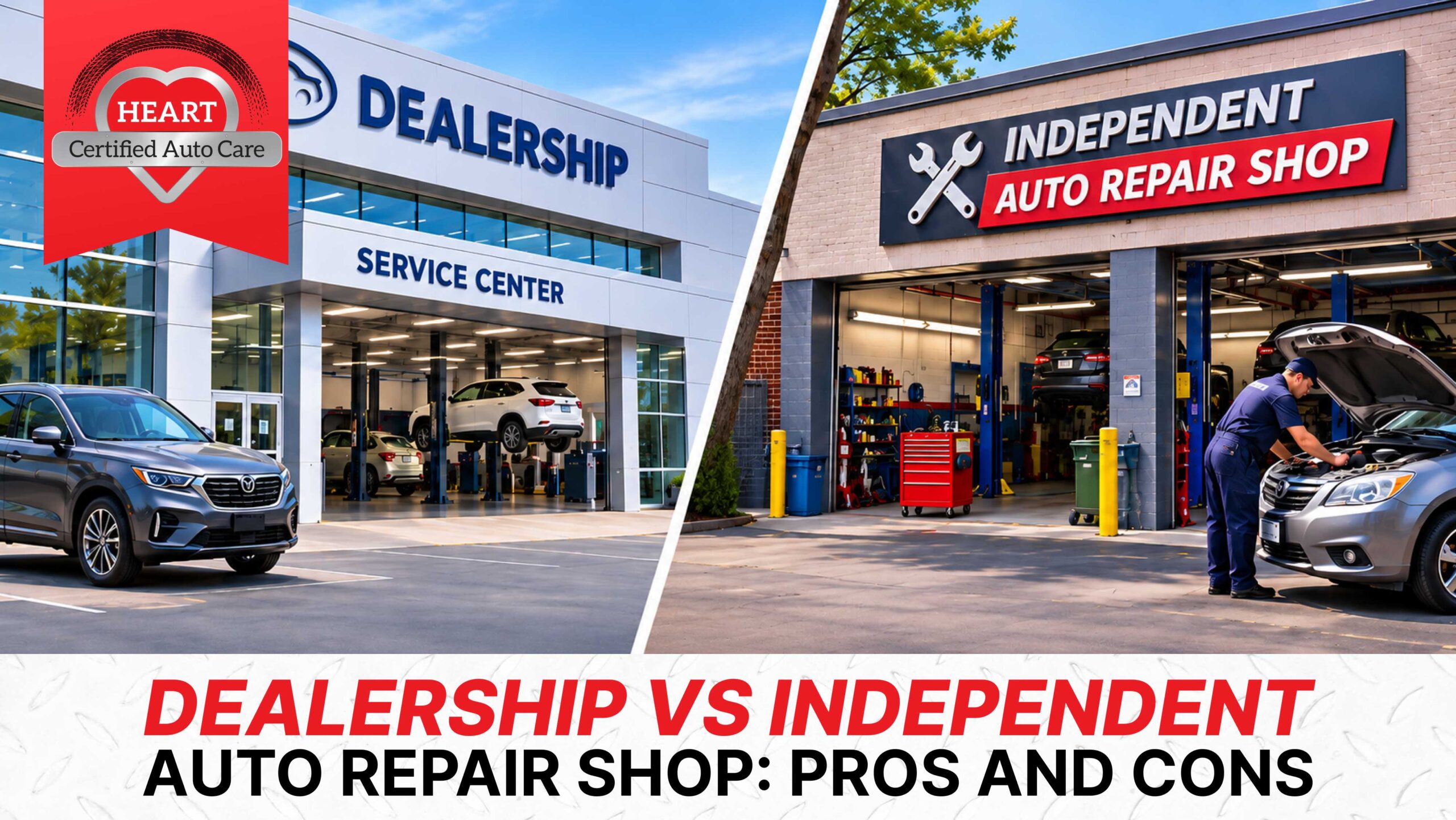
Choosing where to service your vehicle can affect your budget, repair experience, and long-term maintenance costs. When comparing a dealership vs independent auto repair shop, the best option depends on your vehicle’s age, the type of repair, warranty coverage, and the technician’s experience.
Dealerships offer brand-specific expertise, access to manufacturer resources, and support for certain warranty repairs. Independent shops can offer competitive pricing, personalized service, and maintenance for a wide range of makes and models. Understanding the advantages and limitations of each can help you make a confident decision without paying for services your vehicle does not need.
A dealership service department repairs and maintains vehicles associated with its automotive brand. An independent auto repair shop operates separately from a vehicle manufacturer or dealership network and may service multiple makes and models.
The main difference involves specialization, pricing, parts options, and access to manufacturer-specific services. Neither type of business guarantees better results, so it helps to compare the capabilities of the individual shop.
Dealerships employ technicians who regularly work with vehicles from a particular manufacturer. They typically have access to manufacturer service information, approved repair procedures, and original equipment manufacturer (OEM) parts.
This makes dealerships a practical option for certain new-vehicle repairs, recalls, software updates, and complicated electronic problems.
Independent repair shops range from general maintenance garages to specialists in specific makes, systems, or vehicle types. Some employ technicians with dealership experience or manufacturer-specific training.
An experienced independent shop may handle oil changes, brake repairs, suspension work, air conditioning problems, battery replacement, and many complex mechanical repairs.
For drivers comparing dealership service vs independent shop options, the key question is whether the facility has the equipment, training, and experience required for the specific job.
Both options have advantages, and the right choice can change depending on your vehicle and circumstances. Consider the following differences before scheduling your next service appointment.
Dealerships can provide specialized support, particularly when a vehicle needs manufacturer-directed repairs. However, their pricing and service availability may not suit every driver’s needs.
A dealership can be the sensible choice when a repair requires factory-specific expertise or falls under manufacturer coverage. For routine maintenance outside a coverage plan, comparing another qualified provider may reveal a better overall value.
Independent shops offer an alternative for drivers who want professional maintenance without relying on a dealership for every service. Their capabilities and service standards vary, so evaluating the individual business is important.
An independent shop can be a strong option for routine maintenance and many mechanical repairs. Before booking, ask about technician qualifications, diagnostic capabilities, parts specifications, and the written repair warranty.


An independent mechanic often charges less for comparable repairs, but the difference depends on the vehicle, location, parts, and work required. Comparing the complete estimate is more useful than looking at the hourly labor rate alone.
Consumer Reports’ 2024 repair-shop survey found that independent shops received the strongest ratings for price satisfaction, while dealerships tended to receive lower price ratings. These results reflect surveyed members’ experiences, not a guarantee that every independent shop will be cheaper.
Several factors influence independent auto repair costs and dealership estimates.
Consider a driver whose dashboard warning light comes on. One shop may charge for diagnosis and recommend replacing a component, while another may need additional testing before identifying the cause. The cheapest initial estimate is not necessarily the least expensive final repair if it fails to address the underlying problem.
Request an itemized estimate that separates parts, labor, diagnostic charges, taxes, and additional fees. This gives you a clearer basis for comparing dealership service vs independent shop pricing.
No. In the United States, routine maintenance at an independent repair shop does not automatically void a manufacturer’s warranty. However, warranty coverage depends on the specific terms, the maintenance performed, and the circumstances of a claim.
The Federal Trade Commission advises consumers to review warranty terms and understand their rights before agreeing to repair work.
Before choosing a shop, take these steps.
If you are comparing a dealership vs independent mechanic for a newer vehicle, start by confirming what coverage remains. You may find that an independent shop is appropriate for routine maintenance while a dealership is better suited to a specific covered repair.
Dealerships are particularly useful when a repair depends on manufacturer-specific information or services. Consider one of the following situations before booking elsewhere.
These situations do not mean every dealership repair is necessary or that independent shops lack advanced capabilities. Ask which procedure or equipment the job requires and whether the independent shop can perform it correctly.
For many maintenance tasks and mechanical repairs, a qualified independent shop can provide the expertise and value you need. This is especially worth considering once your vehicle is outside its original warranty period.
Independent auto repair costs may be lower for comparable work, but price should never be the only deciding factor. Look for a shop that documents its findings, explains repair priorities, and obtains your approval before doing additional work.
Regardless of where you go, the quality of the diagnosis and repair matters most. These practical checks can help first-time car owners and experienced drivers evaluate a shop before committing to a major repair.
A dependable shop should welcome reasonable questions rather than pressure you into immediate approval. If the explanation is unclear, ask for clarification or seek another opinion before authorizing a costly repair.

The best choice comes down to the work your vehicle needs, the shop’s capabilities, the total price, and the coverage available to you. Dealerships offer valuable manufacturer-specific services, while qualified independent shops provide another option for maintaining your vehicle and managing repair costs.
Before scheduling a repair, compare itemized estimates, ask about parts and labor warranties, and make sure the technician can perform the required work. A clear explanation and an accurate diagnosis are valuable at any repair facility.
If you need routine maintenance, a brake inspection, tire service, or help investigating an unfamiliar vehicle problem, contact HEART Certified Auto Care. Drivers can book online and choose a convenient location in Evanston, Wilmette, Northbrook, or Libertyville.
Visit heartautocare.com to review available services and schedule an appointment.


At HEART Certified Auto Care, we believe auto repair should feel honest, approachable, and stress-free — not confusing or intimidating. We’re not your typical repair shop. We take the time to explain what your car truly needs (and what it doesn’t), so you can make confident decisions without pressure.
Our experienced technicians focus on long-term vehicle health, preventative care, and clear communication. Whether you’re stopping in for routine maintenance or unexpected repairs, you’ll always be treated like family — with respect, transparency, and genuine care for your safety on the road.
With multiple convenient locations, HEART Certified Auto Care proudly serves drivers throughout Chicago’s North Shore and surrounding suburbs, providing dependable auto repair you can trust year after year.
Proudly Serving Local Communities Including:
Looking for dependable auto repair near you? Schedule an appointment with HEART Certified Auto Care today and experience the difference of local service done right.




Servicing Your Vehicle Has Never Been Easier
3 Year Warranty

Free Loaner Cars

98% Same Day Service

Transparent Pricing

Finance Options

Certified Technicians

Free Digital Inspection