


3 Year Warranty
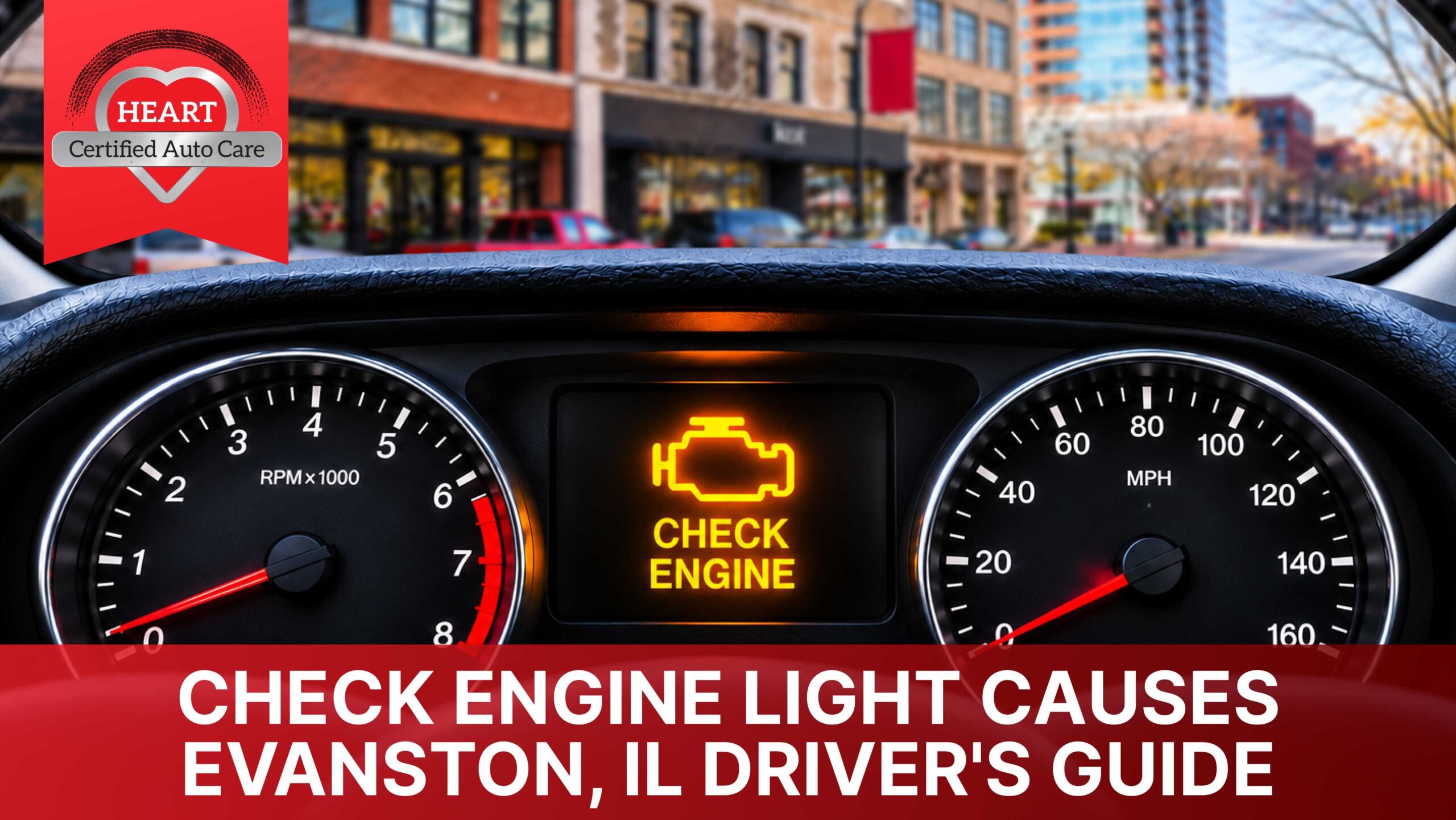
Seeing your check engine light come on can make any driver wonder what went wrong. For drivers searching for check engine light causes Evanston IL, the answer can range from a loose gas cap to an ignition problem, sensor failure, or an issue with the emissions system.
The light itself cannot tell you exactly which component has failed. Your vehicle stores a diagnostic trouble code that gives a technician a starting point for finding the underlying problem.
A steady light usually calls for prompt service rather than an immediate emergency. A flashing check engine light deserves faster attention because it can indicate a serious misfire that may damage the catalytic converter.
The check engine light, also called the malfunction indicator lamp, is part of your vehicle’s onboard diagnostic system. Modern vehicles constantly monitor engine and emissions-related systems using sensors and computer controls.
When the computer detects readings outside its programmed range, it can store a diagnostic trouble code and illuminate the dashboard warning.
That does not automatically mean your engine needs major repairs. A loose fuel cap can trigger the warning, while other cases involve components affecting combustion, fuel delivery, emissions, or airflow.
This distinction matters for first-time car owners. The warning light alerts you, not provides a complete diagnosis.
A car that feels normal can still have a problem worth checking. Some vehicles compensate for certain faults, allowing the driver to continue driving without immediately noticing a change in performance.
The most useful way to understand common check engine light causes in Evanston is to look at the systems that can trigger the warning. Several issues appear repeatedly across different makes and models.
A fuel cap helps seal the fuel system. If the cap is loose, cracked, or has a damaged seal, the vehicle can detect an EVAP system leak and turn on the check engine light.
This is one of the simplest things to check after filling the tank. Remove the cap, inspect the seal, and reinstall it securely.
If the light remains on after several drive cycles, the gas cap may not be the real problem. An EVAP hose, purge valve, vent valve, or another part of the system could require testing.
Oxygen sensors measure oxygen levels in the exhaust and send information to the engine computer. The computer uses that information to adjust fuel delivery.
A faulty sensor can contribute to poor fuel economy, increased emissions, rough running, or a check engine light.
Replacing a sensor without confirming the underlying code can waste money. A proper diagnosis helps determine which sensor or circuit has the problem.
Spark plugs ignite the air-fuel mixture inside the engine. Ignition coils provide the electrical energy needed for the spark.
As these components wear out, the engine may misfire. You might notice shaking at idle, hesitation during acceleration, reduced power, or a warning light.
A misfire deserves attention because continued operation can allow excess unburned fuel to reach the exhaust system and damage the catalytic converter.
The mass airflow sensor measures incoming air so the engine computer can calculate the appropriate fuel mixture.
A dirty or malfunctioning sensor can contribute to poor acceleration, rough idling, stalling, or reduced fuel economy.
Air intake leaks can produce similar symptoms, so replacing the sensor immediately may not solve the actual problem. Diagnostic testing helps separate a faulty sensor from another airflow issue.
The catalytic converter helps reduce harmful pollutants in exhaust gases. A problem with the converter can trigger a diagnostic code and check engine light.
Catalytic converter issues can also develop after another engine problem has gone untreated. Repeated misfires, for example, can place excessive heat and unburned fuel into the exhaust.
That is one reason a warning light deserves attention even when the vehicle still seems to drive normally.
The evaporative emissions system controls fuel vapors rather than allowing them to escape into the atmosphere.
A small leak can trigger the check engine light without causing obvious changes in how the vehicle drives.
EVAP faults can involve the fuel cap, hoses, valves, or other components. Finding the exact leak may require specialized diagnostic equipment.


There is no single cause behind every warning light. The engine computer monitors many systems, so check engine light causes Evanston IL drivers encounter can vary based on vehicle age, mileage, make, model, maintenance history, and driving conditions.
A useful clue comes from what happens at the same time as the warning.
Watch for symptoms such as:
Pay attention to when the symptoms appear. A problem that occurs after refueling may point toward the EVAP system, while shaking during acceleration can make an ignition-related problem more likely.
These clues do not replace testing, but they can help a technician narrow down the possibilities.
A flashing check engine light in Evanston IL deserves immediate attention.
A flashing light can indicate an active engine misfire severe enough to damage the catalytic converter. Consumer Reports notes that a blinking light can appear when unburned fuel enters the exhaust system, creating excessive heat.
If the light starts flashing, pay attention to the vehicle’s behavior.
A steady light presents a different situation. If the car runs normally and the light remains solid, you can generally arrange service promptly rather than treating it as an immediate roadside emergency. Still, the exact urgency depends on the vehicle’s symptoms and the underlying fault.
This is one of the most common questions people ask after seeing the warning.
A solid check engine light does not automatically mean you need to stop immediately. However, driving for weeks or months without finding the cause can allow a small problem to develop into a larger repair.
For example, a problem affecting the air-fuel mixture can influence engine operation and emissions. An unresolved misfire can place additional stress on the catalytic converter.
Stop driving and seek immediate assistance if the vehicle also has severe symptoms such as:
If your vehicle has a solid light and feels normal, schedule a diagnostic inspection rather than ignoring the warning.
Proper check engine light diagnosis in Evanston IL starts with retrieving the diagnostic trouble code stored in the vehicle’s computer.
A code can identify the system or circuit involved, but it does not always identify the failed part.
For example, an oxygen sensor-related code does not automatically mean the sensor itself needs replacement. A wiring problem, exhaust leak, fuel mixture issue, or another fault can sometimes produce a related code.
A professional diagnostic process can include:
This approach helps prevent unnecessary parts replacement. A scan tool provides valuable information, but diagnosis requires interpreting that information in the context of the vehicle.

Understanding check engine light causes Evanston IL drivers encounter can help you respond calmly when that amber symbol appears on the dashboard.
The warning may come from something simple, such as a loose gas cap, or from a problem involving ignition, airflow, fuel control, emissions, or the catalytic converter. The only reliable way to identify the cause is to diagnose the vehicle rather than guessing from the light alone.
HEART Certified Auto Care can help Evanston drivers investigate warning lights and other vehicle concerns. The Evanston shop is located at 2620 Green Bay Rd, and the team provides digital inspection information so you can see what technicians find before deciding on recommended repairs.
If your check engine light has come on, schedule an inspection with HEART Certified Auto Care instead of waiting for the problem to get worse. You can visit the Evanston location at 2620 Green Bay Rd or choose the HEART location that works best for you in Evanston, Wilmette, Northbrook, or Libertyville.
Visit https://heartautocare.com/ to request an appointment and get your vehicle checked.


At HEART Certified Auto Care, we believe auto repair should feel honest, approachable, and stress-free — not confusing or intimidating. We’re not your typical repair shop. We take the time to explain what your car truly needs (and what it doesn’t), so you can make confident decisions without pressure.
Our experienced technicians focus on long-term vehicle health, preventative care, and clear communication. Whether you’re stopping in for routine maintenance or unexpected repairs, you’ll always be treated like family — with respect, transparency, and genuine care for your safety on the road.
With multiple convenient locations, HEART Certified Auto Care proudly serves drivers throughout Chicago’s North Shore and surrounding suburbs, providing dependable auto repair you can trust year after year.
Proudly Serving Local Communities Including:
Looking for dependable auto repair near you? Schedule an appointment with HEART Certified Auto Care today and experience the difference of local service done right.





Servicing Your Vehicle Has Never Been Easier
3 Year Warranty

Free Loaner Cars

98% Same Day Service

Transparent Pricing

Finance Options

Certified Technicians

Free Digital Inspection