


3 Year Warranty
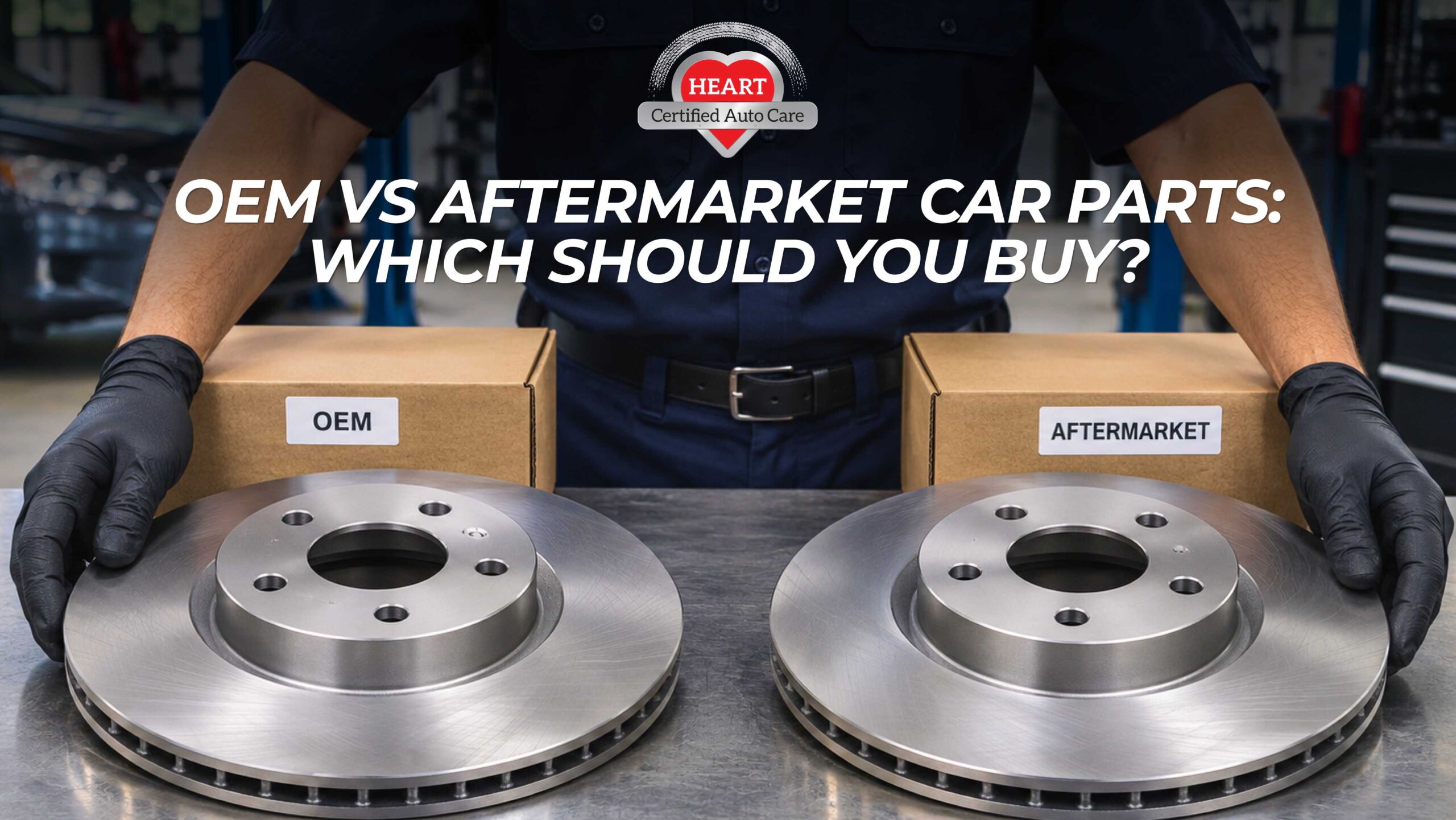
Choosing replacement parts can make a noticeable difference in your car repair bill. When a mechanic gives you an estimate, you may have to decide between OEM and aftermarket components, often with different prices and warranty terms.
Understanding OEM vs aftermarket car parts helps you compare your options without paying for features you may not need or choosing a part that does not suit your vehicle. The best choice depends on the component, its quality, the repair requirements, and how long you plan to keep your car.
For drivers in Evanston, Wilmette, Northbrook, and Libertyville, knowing what to ask your repair shop can make the process easier and help you make a more informed decision.
OEM and aftermarket parts serve the same general purpose, but they come from different supply channels and may follow different design and manufacturing requirements.
Knowing the distinction helps you evaluate a repair estimate and understand what you are paying for.
OEM stands for Original Equipment Manufacturer. In the replacement-parts market, the term generally refers to parts supplied under the vehicle manufacturer’s brand or produced to its specifications for a particular vehicle.
For example, a driver replacing a failed sensor might choose the vehicle manufacturer’s specified replacement part. This can simplify compatibility checks, especially when the sensor communicates with other vehicle systems.
Common advantages of OEM replacement parts include:
However, OEM parts can cost more, and some may require ordering through a dealership or parts supplier. Also, an OEM replacement may incorporate an updated design, so it is not always physically identical to the original factory-installed component.
Aftermarket auto parts are made by companies other than the vehicle manufacturer for replacement, maintenance, or performance purposes. Some are designed as direct-fit alternatives, while others offer different materials, features, or performance characteristics.
The category covers a wide range of products, from established manufacturers with rigorous quality controls to inexpensive parts with limited documentation.
Here are common benefits of aftermarket auto parts:
The important point is that aftermarket does not automatically mean inferior. Ask about the manufacturer, specifications, fitment, and warranty instead of judging a part by its price alone.


When comparing OEM parts vs aftermarket parts, consider the needs of the repair rather than relying on a simple rule that one type is always better.
| Factor | OEM parts | Aftermarket parts |
|---|---|---|
| Price | Often higher | Ranges from budget to premium |
| Fitment | Designed for the specified vehicle | Depends on the product and application |
| Quality | Generally consistent with manufacturer requirements | Varies by brand and product |
| Availability | May require dealership ordering | Often available from multiple suppliers |
| Warranty | Depends on the part and seller | Depends on the manufacturer and seller |
| Performance | Intended to meet vehicle requirements | May match, differ from, or exceed original performance |
| Selection | Usually fewer options | Often more brands and designs |
Neither column guarantees the outcome of a repair. A well-made aftermarket component may offer excellent value, while a poorly matched part can cause fitment issues regardless of its low price.
OEM parts often have a higher purchase price, though the difference varies by vehicle and component. Aftermarket manufacturers compete across different price points, which gives drivers more choices.
For a fair comparison, ask for an itemized estimate that includes the part, labor, related hardware, and any required programming or calibration. A lower part price does not always mean a lower final bill.
For example, an inexpensive sensor may require extra diagnostic time if it is incompatible with the vehicle or fails to communicate correctly. Paying for a suitable part from the start may prevent avoidable delays and repeat work.
OEM parts can be a sensible choice when precision, manufacturer requirements, or the consequences of a failure make consistency especially important.
The right recommendation depends on the vehicle and the specific component. These situations deserve particular attention.
For these repairs, ask your mechanic why the recommended component is appropriate and whether the manufacturer specifies an OEM part or permits an equivalent alternative.
Choosing OEM can reduce uncertainty, but correct diagnosis, installation, and any required calibration remain essential.
Aftermarket parts can be a practical option for many common repairs, particularly when a reputable manufacturer offers a component that meets the vehicle’s requirements.
Consider these examples when reviewing your repair options.
For each item, confirm that the part is designed for your exact vehicle and that the manufacturer provides clear product information and warranty support.
A reputable aftermarket brand is often a reasonable choice for routine maintenance. For safety-related repairs, ask your mechanic to explain how the selected part meets the vehicle’s specifications rather than assuming every replacement is interchangeable.
Using aftermarket parts does not automatically void a vehicle warranty in the United States. Under federal law, manufacturers generally cannot void warranty coverage solely because you used an aftermarket part. However, warranty coverage may be denied for a particular failure if the manufacturer can establish that a defective or improperly installed part caused the damage.
Before authorizing a repair, check the following:
Drivers with leased vehicles should also review their lease terms, particularly for collision repairs and return-condition requirements. If your vehicle is still under warranty, ask the repair shop to explain any potential coverage implications before work begins.
You do not need to become a parts expert to make a sound repair decision. Start with the problem, compare suitable options, and ask your mechanic to explain the trade-offs in plain language.
Use these five steps when reviewing a repair estimate.
The goal is to choose a part that meets the vehicle’s needs and fits your budget without compromising repair quality.
A good repair conversation should leave you confident about the recommended work and its cost. If you are unsure which part to choose, ask your mechanic these questions before approving the estimate.
These questions help you compare options based on evidence rather than assumptions. They also make it easier to understand why one estimate may cost more than another.

Choosing between OEM and aftermarket car parts comes down to compatibility, quality, warranty coverage, and total repair cost. The most expensive part is not automatically the best option for every repair, and the cheapest replacement may not provide the best long-term value.
HEART Certified Auto Care can help you understand your repair needs and evaluate suitable replacement options. Ask questions, review the estimate, and make sure you understand the recommended work before giving your approval.
If your car needs maintenance or a replacement part, contact HEART Certified Auto Care to discuss your repair needs and schedule an appointment. Drivers can visit the locations serving Evanston, Wilmette, Northbrook, and Libertyville, Illinois.
Visit heartautocare.com to learn more and arrange your next service.


At HEART Certified Auto Care, we believe auto repair should feel honest, approachable, and stress-free — not confusing or intimidating. We’re not your typical repair shop. We take the time to explain what your car truly needs (and what it doesn’t), so you can make confident decisions without pressure.
Our experienced technicians focus on long-term vehicle health, preventative care, and clear communication. Whether you’re stopping in for routine maintenance or unexpected repairs, you’ll always be treated like family — with respect, transparency, and genuine care for your safety on the road.
With multiple convenient locations, HEART Certified Auto Care proudly serves drivers throughout Chicago’s North Shore and surrounding suburbs, providing dependable auto repair you can trust year after year.
Proudly Serving Local Communities Including:
Looking for dependable auto repair near you? Schedule an appointment with HEART Certified Auto Care today and experience the difference of local service done right.





Servicing Your Vehicle Has Never Been Easier
3 Year Warranty

Free Loaner Cars

98% Same Day Service

Transparent Pricing

Finance Options

Certified Technicians

Free Digital Inspection