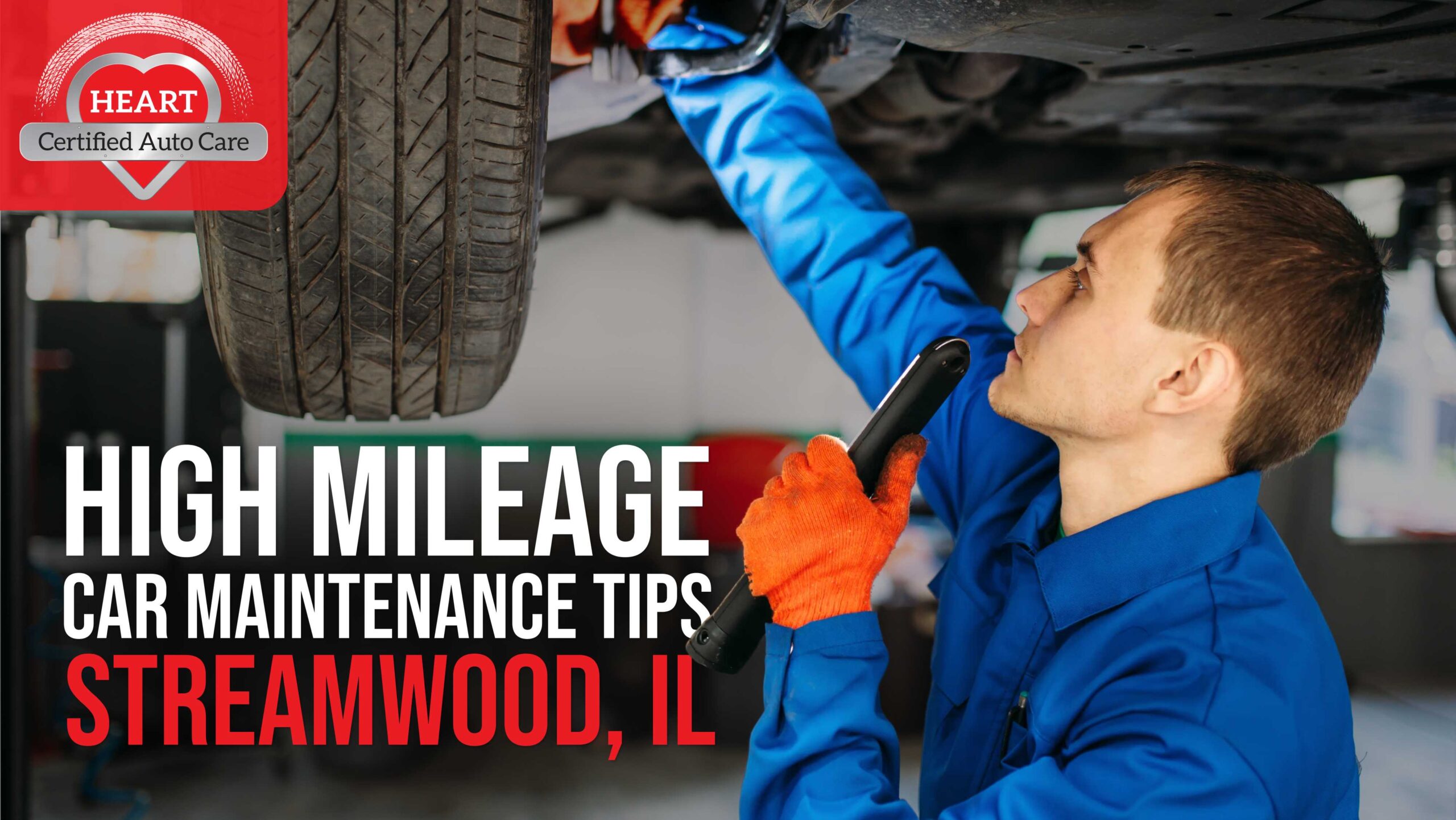
High Mileage Car Maintenance Tips Streamwood IL
A high-mileage vehicle can still be a reliable daily driver. Reaching 100,000 miles does not automatically mean the engine, transmission, or other major systems are nearing the end of their useful life. Modern vehicles can reach well beyond 200,000 miles when owners keep up with maintenance and repair problems as they develop.
The challenge comes with knowing what deserves attention as your vehicle gets older. A car that has accumulated 120,000 miles with consistent oil changes and documented service can be in better shape than a lower-mileage vehicle that has missed important maintenance.
For drivers in Streamwood, the best approach combines the factory maintenance schedule with a close look at the vehicle’s current condition.
TL;DR – High Mileage Car Maintenance Tips Streamwood IL
- A vehicle with 100,000 miles or more can still provide dependable transportation when you follow its maintenance schedule and address wear before it becomes a breakdown.
- High mileage car maintenance checklist in Streamwood IL should include oil, fluids, tires, brakes, battery, cooling components, belts, hoses, steering, and suspension.
- A high mileage vehicle maintenance schedule in Streamwood IL should follow the manufacturer’s recommendations while accounting for short trips, stop-and-go traffic, weather, towing, and other driving conditions.
- Maintenance tips for cars over 100,000 miles include keeping accurate service records and paying attention to changes such as leaks, unusual noises, vibration, fluid loss, and warning lights.
- Car maintenance for older vehicles in Streamwood IL works best when you combine routine service with regular inspections instead of waiting for a component to fail.
High Mileage Car Maintenance Tips Streamwood IL Drivers Should Know
High-mileage maintenance starts with a simple idea: do not maintain the odometer alone. Maintain the vehicle in front of you.
Mileage provides useful milestones, but age, driving habits, climate, previous repairs, and service history also affect how quickly components wear. A vehicle that spends most of its time in stop-and-go traffic can experience different stresses than one that spends most of its miles cruising on the highway.
Here are the systems worth watching most closely.
- Engine oil and filter – Keep oil service on the schedule specified for your exact vehicle. Check the oil level periodically, especially if your engine has started consuming oil between changes.
- Transmission and drivetrain fluids – Transmission, differential, and transfer-case fluids can deteriorate with heat and use. Follow the manufacturer’s recommendations instead of assuming a fluid labeled “lifetime” never needs attention.
- Cooling system – Check coolant condition, hoses, the radiator, water pump, and visible leaks. An aging cooling system deserves attention because overheating can cause extensive engine damage.
- Tires and alignment – Check pressure, tread, sidewalls, and wear patterns regularly. Uneven wear can point to alignment, suspension, or inflation problems that deserve inspection.
- Brakes – Have brake pads, rotors, calipers, and brake fluid checked at appropriate intervals. Changes in pedal feel, grinding, pulling, or unusual noises deserve prompt attention.
- Battery and charging system – An older battery can become less dependable, especially in extreme temperatures. A battery and charging-system test can identify a weak component before it leaves you stranded.
- Belts and hoses – Rubber components age from heat and time as well as mileage. Cracking, swelling, fraying, soft spots, or fluid contamination can signal that a component needs attention.
- Steering and suspension – Shocks, struts, bushings, ball joints, tie rods, and wheel bearings can wear gradually. Symptoms may include excessive bouncing, clunking, wandering, vibration, or uneven tire wear.
These checks work together. For example, uneven tire wear may appear to be a tire problem when the underlying issue is alignment or worn suspension components.
That is why a complete inspection can provide useful information when an older vehicle reaches another major mileage milestone.
What Does a High Mileage Car Maintenance Checklist Include
A high mileage car maintenance checklist in Streamwood IL should give you a practical way to track what has been completed and what needs inspection next.
Rather than replacing every component simply because the odometer has reached a certain number, compare your vehicle’s maintenance history with the manufacturer’s recommendations. Current maintenance guidance consistently recommends using the owner’s manual as the starting point because service intervals vary by vehicle.
Use this checklist when reviewing your vehicle’s maintenance history.
- Review the owner’s manual – Look for the manufacturer’s recommended intervals for oil, filters, coolant, transmission fluid, spark plugs, belts, timing components, and other scheduled items. If your vehicle has a severe-service schedule, check those recommendations too.
- Review previous service records – Records can prevent unnecessary duplicate work and help identify overdue maintenance. If you recently purchased a used vehicle without complete records, an inspection can establish a useful baseline.
- Inspect fluids and leaks – Check engine oil, coolant, brake fluid, transmission fluid, and other applicable fluids. Look for wet spots or stains under the vehicle rather than assuming a small leak will remain small.
- Inspect tires and brakes – Check tread, pressure, sidewalls, brake components, and wear patterns. These systems affect stopping, handling, and daily driving safety.
- Check belts, hoses, and cooling components – Look for visible deterioration and review the replacement history of scheduled components. Your vehicle’s specific engine determines which parts require replacement and when.
- Test the battery and charging system – A test can provide useful information about battery condition and charging performance. This matters especially when the vehicle has begun showing slow starts or electrical symptoms.
- Inspect steering and suspension – Worn components can affect ride quality, handling, tire wear, and alignment. A technician can check components that are difficult for an owner to evaluate from the driveway.
- Check warning lights and diagnostic codes – Never ignore a check-engine light or other warning indicator simply because the vehicle still drives normally. Some problems begin with symptoms that are easy to overlook.
The purpose of the checklist is not to create a huge repair bill. It helps you separate routine maintenance from repairs that actually need attention now.
High Mileage Vehicle Maintenance Schedule in Streamwood IL
A high mileage vehicle maintenance schedule in Streamwood IL should combine mileage, time, and vehicle condition.
There is no universal rule that says every car needs exactly the same service at 100,000 or 150,000 miles. Manufacturers specify different requirements for different engines, transmissions, model years, and driving conditions.
A practical framework looks like this:
- Every month – Check tire pressures, look at fluid levels, and pay attention to new leaks or warning lights. These quick checks can catch changes before your next scheduled appointment.
- At routine oil service – Review oil level and condition, inspect visible leaks, check tires and brakes, and look over belts and hoses. Ask whether anything observed during the inspection needs monitoring before the next visit.
- At major mileage intervals – Review the manufacturer’s maintenance list for your specific mileage. Items such as spark plugs, transmission fluid, coolant, filters, and timing components may have mileage or time-based intervals.
- Around 100,000 miles – Review the entire maintenance history instead of focusing on a single service item. Confirm that scheduled major services have been completed and inspect aging components that may now show wear.
- After 100,000 miles – Continue following the manufacturer’s schedule while monitoring condition more closely. Components such as suspension parts, seals, hoses, batteries, and other wear items may require attention as the vehicle ages.
- Before long trips – Check tire pressure, fluids, lights, wipers, spare tire equipment, and warning lights. A pre-trip inspection can give you time to address a developing problem before you are hundreds of miles from home.
Streamwood driving conditions can also influence maintenance needs. Frequent short trips, heavy traffic, repeated cold starts, and long periods of idling can place different demands on a vehicle than steady highway driving.
Your owner’s manual should remain the final reference for service intervals, while an inspection can help identify conditions that the mileage schedule cannot predict.
What Maintenance Does a Car Over 100,000 Miles Need
One of the most common questions about high-mileage vehicles is what should happen once the odometer crosses six figures.
The answer depends heavily on what has already been done. A 100,000-mile service should not automatically mean replacing every major component. Instead, use the milestone to review the vehicle’s complete maintenance history and identify overdue items.
- Timing belt or timing components – If your vehicle uses a timing belt, check the manufacturer’s replacement interval and service history. Do not assume that a timing chain requires replacement at a specific mileage because requirements vary by design and condition.
- Spark plugs and ignition components – Check the manufacturer’s interval for spark plugs and inspect related ignition components where applicable. Worn plugs can affect starting, fuel economy, engine performance, and emissions.
- Cooling system – Review coolant service history and inspect hoses, the radiator, thermostat, water pump, and other applicable components. A cooling problem can become serious quickly if the engine overheats.
- Transmission service – Check the vehicle-specific recommendation and previous service history. If the transmission has symptoms such as slipping, delayed engagement, harsh shifting, or unusual noises, it needs diagnosis rather than a generic fluid recommendation.
- Suspension and steering – Inspect shocks or struts, bushings, ball joints, tie rods, wheel bearings, and related components. Wear can appear gradually, so drivers may adapt to poor ride quality without realizing how much the vehicle has changed.
- Seals and leaks – Look for oil, coolant, transmission fluid, or other leaks. Small seepage may only require monitoring in some cases, while active leaks can require prompt repair.
- Battery and electrical components – Test the battery and charging system and check for electrical symptoms. Aging electrical components can produce intermittent problems that become difficult to diagnose if ignored.
This is where a documented service history becomes extremely valuable. It tells you which maintenance has already been completed and gives your technician a better starting point for deciding what deserves attention next.
Maintenance Tips for Cars Over 100,000 Miles
Good maintenance tips for cars over 100,000 miles focus on consistency rather than trying to predict exactly when a component will fail.
One useful habit is to keep a simple maintenance record. Write down the date, mileage, service performed, parts replaced, and any recommendation that you plan to revisit later.
- Track mileage and dates – Some services depend on mileage while others depend on elapsed time. Recording both prevents an older vehicle from slipping through the cracks simply because it has not been driven much.
- Pay attention to new sounds – Clicking, humming, grinding, squealing, rattling, or clunking can provide an early clue. A new noise is worth investigating, particularly when it changes with speed, braking, steering, or engine RPM.
- Watch fluid levels – A fluid level that repeatedly drops may indicate a leak or consumption problem. Topping off the same fluid repeatedly without finding the cause can allow a developing problem to continue.
- Do not ignore small changes – Harder starting, new vibration, rough idle, pulling while braking, or reduced A/C performance can provide useful diagnostic clues. Mention these symptoms during service rather than waiting for them to become severe.
- Use the correct parts and fluids – Follow the specifications for your vehicle rather than choosing products solely because they are labeled “high mileage.” The correct viscosity, specification, and component matter.
- Address safety-related wear first – Tires, brakes, steering, suspension, and visibility-related problems deserve prompt attention. Cosmetic issues and nonessential repairs can often be considered separately.
- Plan for upcoming maintenance – Ask which items are due now and which may become due during the next several thousand miles. Planning ahead can make an older vehicle’s maintenance easier to budget.
A high-mileage vehicle also benefits from realistic expectations. Preventive maintenance reduces the risk of unexpected problems, but it cannot eliminate normal wear or guarantee that a component will never fail.
The goal is to understand the vehicle well enough to make sensible decisions as it continues to accumulate miles.

High Mileage Car Maintenance Tips for Streamwood Drivers
A high-mileage vehicle does not automatically need to be replaced. With consistent maintenance, careful inspections, and attention to changes in how the vehicle drives, many owners can continue using an older car, SUV, or truck for years.
The most useful high mileage car maintenance tips Streamwood IL drivers can follow are simple: know your service history, follow the manufacturer’s schedule, check the vehicle regularly, and investigate changes before they become major problems.
HEART Certified Auto Care helps local drivers understand what their vehicles need through inspections, diagnostics, maintenance, and repair services. The Streamwood shop at 44 Barrington Road is part of the HEART family and provides the same focus on clear communication and certified automotive care found across its locations.
If your vehicle has passed 100,000 miles or you are unsure when it last received major maintenance, schedule an inspection with HEART Certified Auto Care in Streamwood. The team can review your vehicle’s condition, explain what needs attention, and help you plan upcoming maintenance.
HEART also serves drivers through locations in Evanston, Wilmette, Northbrook, and Libertyville, giving local drivers several options for routine maintenance and repair.
Schedule service with HEART Certified Auto Care
Auto Repair & Maintenance Near You

Auto Repair That Actually Cares
At HEART Certified Auto Care, we believe auto repair should feel honest, approachable, and stress-free — not confusing or intimidating. We’re not your typical repair shop. We take the time to explain what your car truly needs (and what it doesn’t), so you can make confident decisions without pressure.
Our experienced technicians focus on long-term vehicle health, preventative care, and clear communication. Whether you’re stopping in for routine maintenance or unexpected repairs, you’ll always be treated like family — with respect, transparency, and genuine care for your safety on the road.
With multiple convenient locations, HEART Certified Auto Care proudly serves drivers throughout Chicago’s North Shore and surrounding suburbs, providing dependable auto repair you can trust year after year.
Proudly Serving Local Communities Including:
Looking for dependable auto repair near you? Schedule an appointment with HEART Certified Auto Care today and experience the difference of local service done right.
Proud to Partner With Our Local Chambers of Commerce
Rooted in the Communities We Serve
What HEART Offers
Servicing Your Vehicle Has Never Been Easier
3 Year Warranty

Free Loaner Cars

98% Same Day Service

Transparent Pricing

Finance Options

Certified Technicians

Free Digital Inspection