



3 Year Warranty


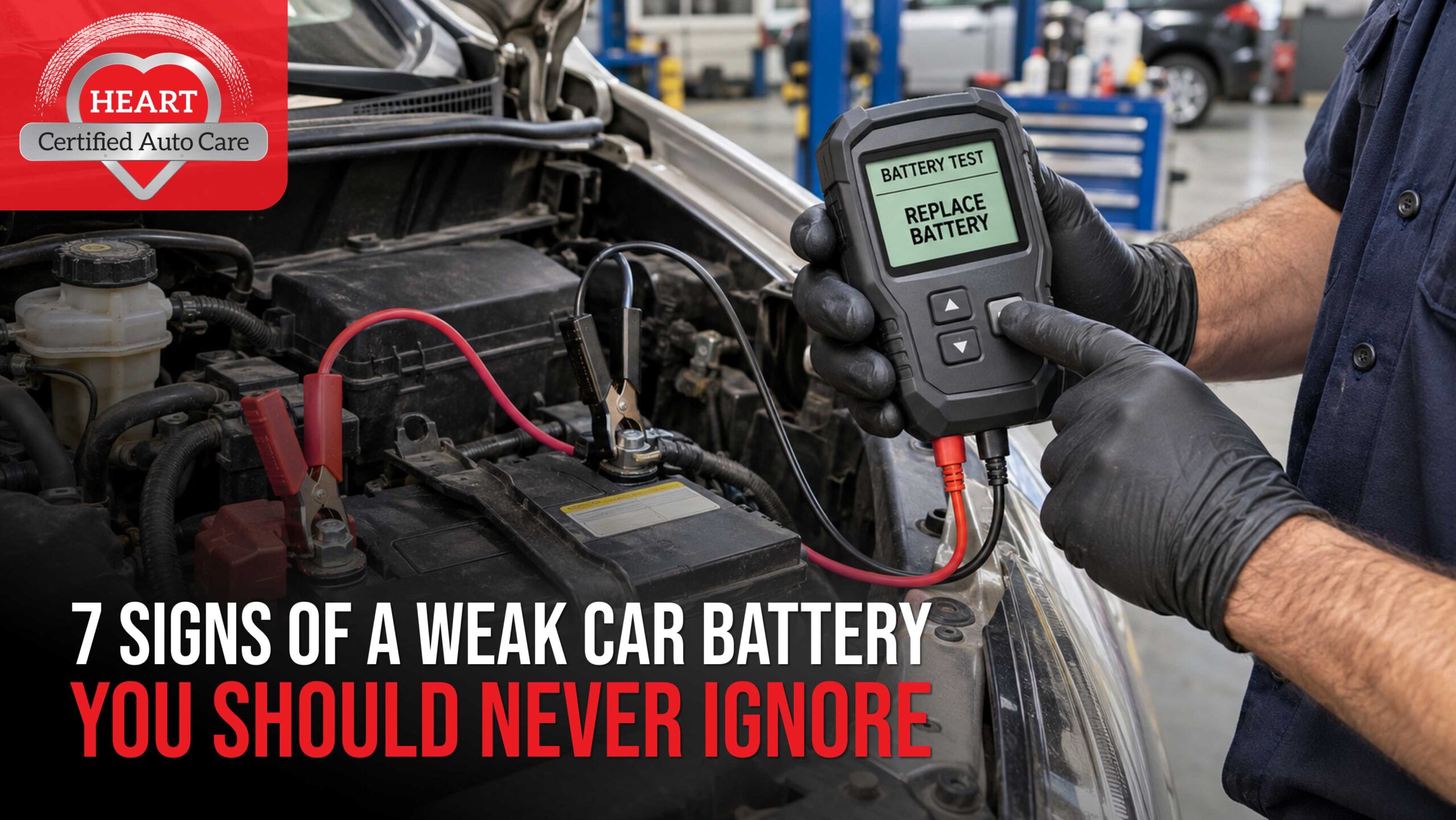
A car that takes longer to start, headlights that suddenly dim, or electronics that behave strangely can point to a battery that is losing its strength. Recognizing the signs of a weak car battery early can help you avoid an unexpected breakdown, especially when you rely on your vehicle for work, school runs, or daily errands.
Your battery may show warning signs before it stops working completely. However, some symptoms can also indicate a failing alternator, a damaged starter, or loose electrical connections. Knowing what to look for helps you decide when to inspect the battery and when to seek professional testing.
A weak car battery struggles to deliver or retain the electrical power your vehicle needs. It may still start the engine occasionally, but its performance becomes less reliable as the battery deteriorates.
Most conventional car batteries last around three to five years, although driving habits, climate, maintenance, and battery type affect their lifespan. A battery may also fail earlier if the vehicle frequently makes short trips or has an electrical problem that drains power while parked.
Here are seven warning signs to watch for before a minor starting problem becomes a roadside inconvenience.
One of the most recognizable weak car battery symptoms is slow engine cranking. When you turn the key or press the start button, the engine may turn over more slowly than usual before finally starting.
A healthy battery supplies a strong burst of electricity to the starter motor. As the battery loses capacity, it may struggle to provide enough current, especially after the vehicle has been parked for several hours.
Pay attention to these changes:
A slow crank does not automatically mean the battery needs replacing. A poor cable connection, worn starter motor, or engine-related problem can produce similar symptoms.
If your vehicle repeatedly takes longer to start, arrange a battery and starting system test rather than waiting for it to stop working altogether.
Dim or flickering lights are another common sign of a possible electrical problem. You might notice the headlights appear weaker than usual, the instrument panel flickers during startup, or interior lights briefly lose brightness.
Your vehicle relies on a stable electrical supply to operate its lighting and electronic systems. A weak battery can contribute to voltage fluctuations, particularly when starting the engine.
Watch for these changes:
Do not assume every lighting issue comes from the battery. A failing alternator, poor ground connection, damaged wiring, or faulty lighting component can also cause these problems.
If the battery warning light illuminates while the engine is running, arrange prompt professional diagnosis. If the vehicle begins losing electrical power or stalls, pull over safely and request assistance.


A clicking sound when you try to start your vehicle can be frustrating, especially when the engine worked normally the previous day.
The starter solenoid and starter motor need sufficient electrical power to turn the engine over. When the battery cannot provide enough current, you may hear repeated clicks without the engine starting.
Listen for the type of sound your vehicle makes.
These car battery warning signs overlap with starter and wiring problems, so sound alone cannot confirm the cause.
Avoid repeatedly attempting to start the engine for long periods. Repeated attempts can drain the remaining battery charge and place additional strain on the starting system.
Modern vehicles depend on electricity for much more than starting the engine. Infotainment systems, power windows, electronic locks, dashboard displays, and other accessories need a stable electrical supply.
When voltage drops, you may notice several features behaving differently from normal. These problems can appear alongside other weak car battery symptoms, particularly when the battery is discharged or deteriorating.
Common examples include:
Some vehicles deliberately disable or limit certain accessories when battery voltage becomes too low. Other electrical faults, such as a failing alternator, damaged wiring, or a poor ground connection, can produce similar behavior.
If several features begin malfunctioning at the same time, ask a technician to check the battery, charging system, and relevant connections instead of replacing individual components without confirming the cause.
Needing a jump-start once does not necessarily mean your battery is failing. Leaving the headlights on overnight or accidentally leaving an accessory powered can discharge an otherwise serviceable battery.
Repeated jump-starts, however, suggest that something needs attention. A battery may no longer hold a sufficient charge, or the alternator may not be replenishing it properly.
Consider these situations:
Repeatedly jump-starting the car without investigating the cause can leave you stranded again. It may also allow an underlying charging problem to go unnoticed.
If you need assistance several times within a short period, have the battery tested under load and the charging system checked. A technician can also investigate excessive current draw when the engine is switched off.
A visual inspection can reveal clues about battery condition, although it cannot measure the battery’s remaining capacity.
With the engine off, park safely and look at the battery from a distance. If the vehicle has a covered or difficult-to-access battery, consult the owner’s manual before attempting an inspection.
Look for the following warning signs:
Do not touch leaking battery fluid, attempt to open a sealed battery, or continue using a visibly damaged battery. Avoid sparks, flames, and improvised repairs around battery terminals.
If the case is swollen, cracked, leaking, or emitting a strong unusual odor, stop using the vehicle and seek professional assistance. Physical damage requires careful assessment even if the engine still starts.
Battery age is an important clue, particularly when you begin noticing several of the symptoms described above.
A conventional car battery often lasts about three to five years, but some batteries fail sooner and others last longer. Temperature extremes, frequent short trips, extended periods without use, and repeated deep discharges can shorten its service life.
Review these factors when assessing your battery:
Age alone does not prove that a battery is defective. A relatively new battery can fail because of a charging fault, internal damage, or a persistent electrical drain.
Likewise, a battery that passes a basic voltage check may still struggle to deliver enough current during startup. Professional testing helps establish whether it can continue serving your vehicle reliably.
The battery and alternator work together, but they perform different jobs. The battery supplies the initial power needed to start the engine, while the alternator generates electricity when the engine runs and replenishes the battery’s charge.
Some symptoms overlap, which is why testing both components matters.
| Symptom | Possible battery problem | Possible alternator problem |
|---|---|---|
| Slow engine cranking | Common possibility | Possible if the battery is undercharged |
| Clicking during startup | Weak charge or poor connection | Possible indirect cause |
| Repeated dead battery | Battery cannot hold a charge | Battery is not being charged properly |
| Battery warning light while driving | Possible electrical system issue | Charging system fault is a key concern |
| Lights dim while driving | Possible low voltage | Charging or voltage regulation problem |
| Car starts with a jump but fails again | Weak or damaged battery | Alternator may not recharge it |
These clues help narrow down the possibilities, but none confirms a diagnosis on its own.
Do not disconnect the battery while the engine is running to test the alternator. This outdated method can damage sensitive vehicle electronics. A proper charging system test is safer and more reliable.
You can perform a few basic checks before booking a service appointment. These steps help you identify warning signs, but they cannot replace a proper battery load test or charging system diagnosis.
If you know how to use a digital multimeter safely, a resting voltage measurement can provide an additional clue. A fully charged conventional 12-volt lead-acid battery often reads around 12.6 to 12.8 volts after resting, depending on its type and condition. However, resting voltage alone cannot establish battery health.
Modern vehicles may also use battery management systems that require specific testing procedures. If you are unfamiliar with automotive electrical systems, leave electrical measurements and repairs to a qualified technician.
A battery should be replaced when testing shows that it can no longer perform reliably, it has suffered internal damage, or it fails to meet the vehicle’s requirements.
Replacement may be appropriate when:
Before installing a replacement, confirm the correct battery size, terminal arrangement, capacity, and required technology for your vehicle. Some vehicles also require battery registration or management system resets after replacement.
If your car has needed several jump-starts, do not assume a new battery will solve everything. Testing the alternator and checking for electrical drains can prevent the replacement battery from developing the same problem.

Recognizing the signs of a weak car battery gives you time to address a problem before your vehicle refuses to start. Slow cranking, dim lights, repeated jump-starts, and electrical glitches deserve attention, especially when several symptoms appear together.
HEART Certified Auto Care offers battery and electrical services to help drivers identify starting and charging problems. Our technicians can evaluate battery condition, inspect electrical connections, and check the charging system to help determine the right next step.
If your vehicle has been slow to start or the battery keeps losing its charge, schedule an appointment before the problem interrupts your routine. HEART Certified Auto Care serves drivers in Evanston, Wilmette, Northbrook, and Libertyville, Illinois.
Visit HEART Certified Auto Care’s battery and electrical services page to learn about available services, or book an appointment online to arrange an inspection. A timely battery check can help you make an informed repair decision and reduce the risk of an unexpected no-start.


At HEART Certified Auto Care, we believe auto repair should feel honest, approachable, and stress-free — not confusing or intimidating. We’re not your typical repair shop. We take the time to explain what your car truly needs (and what it doesn’t), so you can make confident decisions without pressure.
Our experienced technicians focus on long-term vehicle health, preventative care, and clear communication. Whether you’re stopping in for routine maintenance or unexpected repairs, you’ll always be treated like family — with respect, transparency, and genuine care for your safety on the road.
With multiple convenient locations, HEART Certified Auto Care proudly serves drivers throughout Chicago’s North Shore and surrounding suburbs, providing dependable auto repair you can trust year after year.
Proudly Serving Local Communities Including:
Looking for dependable auto repair near you? Schedule an appointment with HEART Certified Auto Care today and experience the difference of local service done right.





Servicing Your Vehicle Has Never Been Easier
3 Year Warranty

Free Loaner Cars

98% Same Day Service

Transparent Pricing

Finance Options

Certified Technicians

Free Digital Inspection