


3 Year Warranty
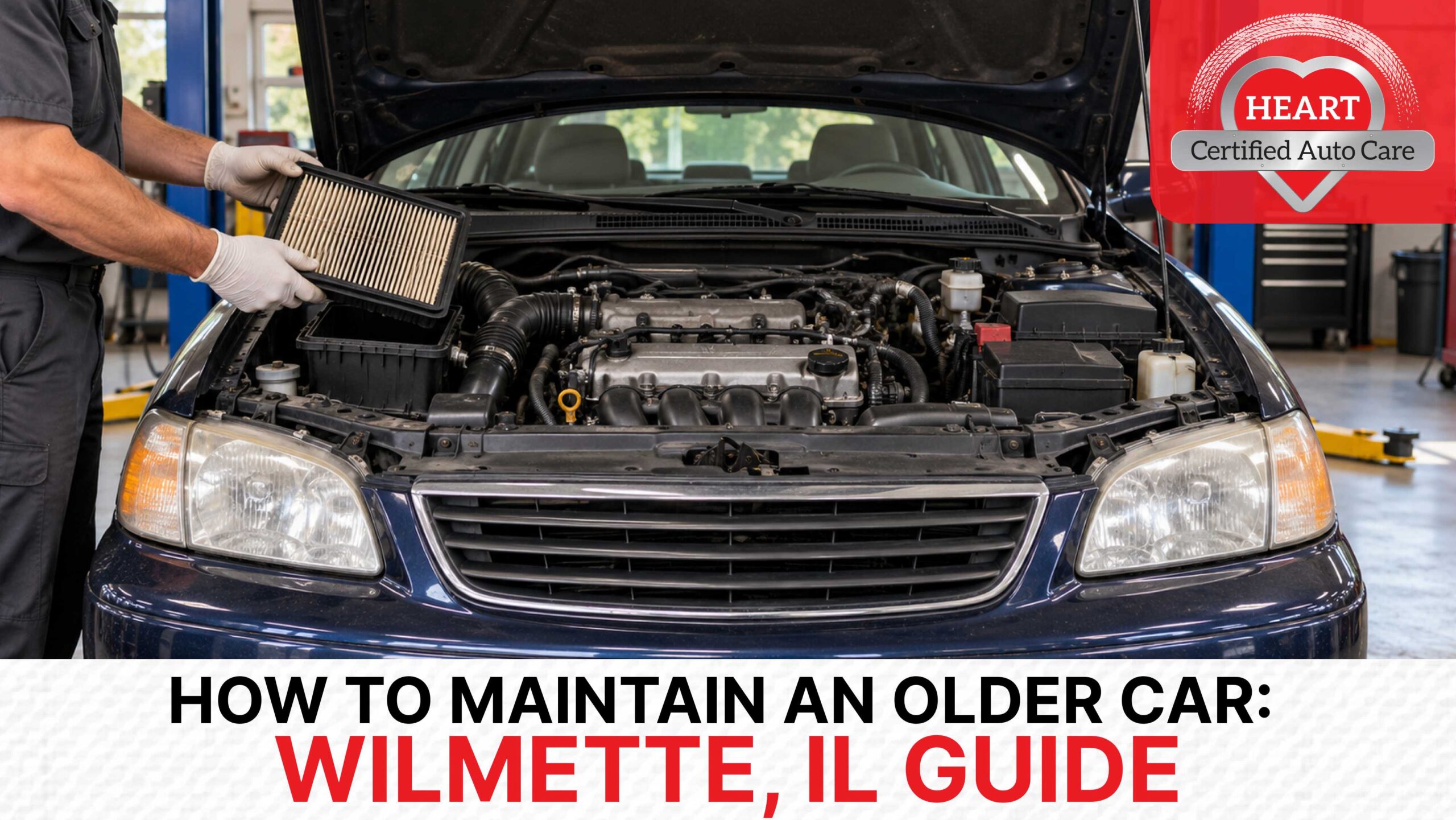
An older car can still be a dependable daily driver when you give it consistent attention. Knowing how to maintain an older car Wilmette IL drivers rely on starts with understanding that age changes what your vehicle needs. Rubber parts can harden, fluids can deteriorate, electrical connections can corrode, and suspension components can wear even when the odometer does not move much.
For drivers in Wilmette, Midwest weather adds another consideration. Cold temperatures, road salt, potholes, and seasonal temperature swings can put extra stress on tires, brakes, batteries, suspension components, and the vehicle’s body.
The good news is that older-car care does not have to mean fixing everything at once. A sensible maintenance plan helps you address safety-related issues first, stay ahead of predictable wear, and make informed decisions when repairs become necessary.
The first step is to stop thinking of maintenance as something you do only when a problem appears. Older vehicles benefit from routine inspections because many components show gradual wear before they cause a breakdown.
A useful approach is to divide maintenance into three categories: regular service, age-related inspections, and repairs based on symptoms. This gives you a clearer picture of what your vehicle needs now and what may need attention later.
Your owner’s manual contains the maintenance intervals recommended for your specific make, model, engine, and transmission. Those recommendations should remain the foundation of your maintenance plan.
If you recently purchased an older vehicle and have incomplete service records, create a new baseline. Write down the current mileage, recent repairs, tire age, oil service, fluid changes, battery replacement, and any maintenance you cannot verify.
That information can prevent duplicate work while helping your technician identify neglected services.
A consistent checklist makes it easier to spot changes before they become major repair problems. This is particularly useful for first-time car owners who may not know which components need attention.
Your older car maintenance checklist in Wilmette IL should include these key areas.
A checklist becomes especially useful when you keep the records in one place. Bring the maintenance history to your repair shop so the technician can see what has already been completed and what still needs investigation.
Mileage still matters, but it should not be the only measure you use. A 12-year-old vehicle with 90,000 miles can have different needs from a 7-year-old vehicle with 150,000 miles.
For high mileage car maintenance in Wilmette IL, technicians should consider both mileage-based services and age-related deterioration.
These services do not all need to happen at the same time. A good technician can help you rank repairs according to safety, reliability, urgency, and the vehicle’s overall condition.


The best preventive car maintenance in Wilmette IL combines scheduled service with regular observation. You do not need to be a mechanic to notice changes in the way your vehicle sounds, feels, or behaves.
Here are some habits that can make a difference.
Preventive care also gives you better control over repair costs. Finding a worn belt or developing suspension issue during routine service gives you time to plan instead of discovering the problem after a breakdown.
One of the hardest parts of owning an older vehicle is deciding what to repair first. You may have several recommendations at once, but not every item carries the same level of urgency.
A practical priority system looks like this:
This approach helps first-time owners avoid feeling overwhelmed by a long inspection report. Ask the technician what needs attention now, what can wait, and what should be monitored.
A car maintenance schedule for older vehicles should combine the manufacturer’s recommendations with the vehicle’s actual condition.
Check tire pressure, exterior lights, windshield washer fluid, visible fluid levels, and signs of leaks. Take note of changes in starting, braking, steering, ride quality, or engine noise.
Review tire wear, battery condition, wiper performance, fluid condition, and visible belts and hoses. If you drive frequently, your vehicle may need more frequent checks than someone who drives only occasionally.
Have the oil and filter changed according to the manufacturer’s recommendation. Ask for an inspection of brakes, tires, suspension, steering, battery, belts, hoses, fluids, and other components relevant to your vehicle’s mileage and age.
Have the battery and charging system tested, check tire condition and pressure, inspect brakes, and make sure the cooling system and windshield system are functioning properly.
Review the manufacturer’s maintenance schedule for services involving timing belts, spark plugs, transmission fluid, coolant, filters, and other mileage-specific components. Service history matters here because you do not want to assume a previous owner completed a service that has no record.
A schedule works best when it becomes part of your normal routine rather than something you rebuild from memory every year.
Older vehicles often provide warning signs before a major failure. The key is recognizing changes instead of assuming they are normal because the vehicle is old.
Watch for:
A symptom does not automatically mean a major repair is needed. Diagnosis comes first. A professional technician can identify the source and explain the repair options before you commit to the work.

HEART Certified Auto Care in Wilmette serves local drivers at 1201 Green Bay Rd. The shop provides oil changes, brake repair, vehicle inspections, heat and A/C service, battery and electrical work, tire services, engine and transmission service, and scheduled maintenance.
For older vehicles, the combination of inspection and scheduled maintenance can make it easier to identify developing problems before they interfere with daily driving. HEART reports that about 98% of services are completed the same day, and qualifying repair work comes with a 3-year/36,000-mile warranty.
HEART Certified Auto Care also has nearby locations in Evanston, Northbrook, and Libertyville, giving North Shore drivers additional options when scheduling service.
If you are looking for high mileage car maintenance in Wilmette IL, bring your service records and mention any changes you have noticed. Details such as when a noise occurs, how long a warning light has been on, or whether a problem appears only during cold starts can help the technician diagnose the vehicle more efficiently.
If your vehicle is aging, high mileage, or simply overdue for a thorough inspection, schedule service with HEART Certified Auto Care. The Wilmette shop is at 1201 Green Bay Rd, and HEART also serves drivers through locations in Evanston, Northbrook, and Libertyville.
Schedule an appointment with HEART Certified Auto Care


At HEART Certified Auto Care, we believe auto repair should feel honest, approachable, and stress-free — not confusing or intimidating. We’re not your typical repair shop. We take the time to explain what your car truly needs (and what it doesn’t), so you can make confident decisions without pressure.
Our experienced technicians focus on long-term vehicle health, preventative care, and clear communication. Whether you’re stopping in for routine maintenance or unexpected repairs, you’ll always be treated like family — with respect, transparency, and genuine care for your safety on the road.
With multiple convenient locations, HEART Certified Auto Care proudly serves drivers throughout Chicago’s North Shore and surrounding suburbs, providing dependable auto repair you can trust year after year.
Proudly Serving Local Communities Including:
Looking for dependable auto repair near you? Schedule an appointment with HEART Certified Auto Care today and experience the difference of local service done right.





Servicing Your Vehicle Has Never Been Easier
3 Year Warranty

Free Loaner Cars

98% Same Day Service

Transparent Pricing

Finance Options

Certified Technicians

Free Digital Inspection